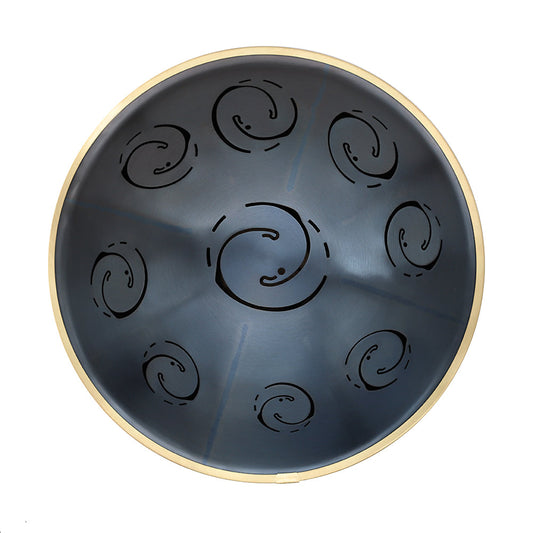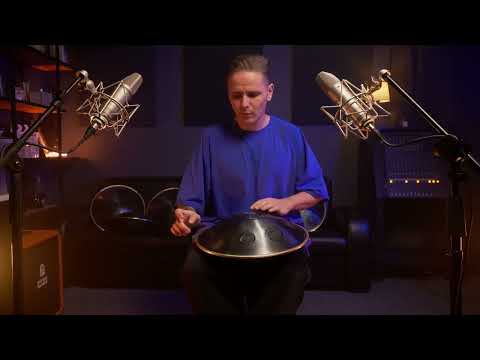

Anyone can experience the joy of creating music on a RAV Vast, regardless of age or musical background. Creating your own song on the RAV Vast is a journey of self-expression, imagination, and fun. This unique steel tongue drum is known for its ethereal sound and intuitive playability. In fact, all its notes are tuned to harmonize, so any melody you create will be beautiful and smooth.
You don’t need years of music theory or technical training to compose something heartfelt. Many RAV players start with zero musical experience yet quickly find themselves playing captivating tunes. The secret is to tap into your emotions and let the instrument guide you. In this article, we’ll walk through step-by-step how to craft your very first original song on the RAV Vast, from sparking an initial idea to sharing your finished piece. Along the way, you’ll get tips on rhythm, silence, improvisation, and more. By the end, you’ll feel empowered to create music that’s truly your own and have a blast doing it. Let’s dive in!
Step 1: Start with Emotion or Story
Every great song begins with emotion. Ask yourself: What do I want to express? It could be a feeling like joy, nostalgia, peace, or longing. It could even be a simple story or image that inspires you (a sunrise, a calm forest, a loved one’s smile). Starting from an emotion gives your music a heart and purpose. Close your eyes and tune into that feeling. How would it sound if it were music? Would it be slow and tender, bright and lively, or mysterious and haunting?
Importantly, the RAV Vast comes in various scales, and each scale has a unique mood or flavor. In a way, choosing your RAV’s scale is like choosing the emotional color palette for your song. For instance, a major scale RAV tends to sound uplifting and joyful, while a minor scale RAV might sound mellow or bittersweet. If you already own a RAV Vast, you’re working within the mood of its scale, so embrace that. And if you only have one drum; perfect. You don’t need a collection to start composing. Whatever instrument you have at home is more than enough to create something meaningful.
If you happen to have multiple drums or the Virtual RAV Player, you can experiment with different scales to match the emotion you want to convey. Choosing the scale is essentially choosing the mood of the music, so pick one that resonates with the feeling you wish to share.
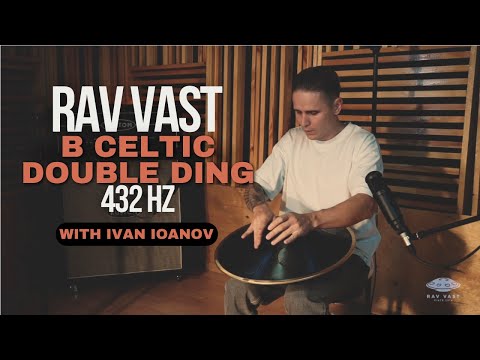
As an example, the RAV Vast B Celtic Minor scale is known for being tranquil and magical. A song of calm reflection might fit perfectly in B Celtic Minor. On the other hand, a D Major RAV Vast has a triumphant, happy tone, so it is great for a cheerful, celebratory tune. Don’t worry if these scale names sound foreign now; what matters is the emotion behind them. Trust your ear and if a scale’s sound makes you feel the way you want your song to feel, that’s a good choice.
Composing on the RAV Vast can be a meditative journey that connects you with your inner self and emotions. Finally, give yourself permission to be honest with your self-expression. If you’re feeling something strongly, let that drive the music. The RAV Vast is an emotional agent that lets us communicate our feelings through melodies that are close to our hearts. There’s no wrong feeling to start a song with, no special skill needed, and no expensive gear required. Start with whatever you have and whatever emotion is real for you right now. The rest will unfold naturally.
Step 2: Find Your Root Note and Explore the Scale
Once you have a mood in mind, it’s time to get hands-on with your RAV Vast. Place the drum in front of you (on your lap or a stand) and just listen for a moment. Notice that central note on your RAV (often called the “ding” or bass note) – this is usually the root note of your drum’s scale. Think of it as the home base or the tonal center of your song. If your RAV is a B Celtic, for example, the note B is your root; if it’s D Major, D is the root. This root note will feel like a natural place to start and end musical phrases, providing a sense of resolution. Go ahead and strike that central note a few times. Let its sound wash over you. Does it feel like the “ground” of your music? Get comfortable with that feeling.
Now, begin exploring the other notes freely. The beauty of the RAV Vast is that all its notes complement each other, so you can’t hit a wrong note. Everything will sound harmonious in some way on RAV Vast Start by tapping notes in random order, without any plan, just to discover how they sound. Try going up the scale (low to high) and back down or jump around. Notice which notes sound bright, which sound deep, which ring out longest. Observe, listen, and feel the instrument responding to your touch.
As you play around, you might find yourself drawn to certain note combinations. Perhaps hitting three notes in a sequence makes a pleasing little phrase, or alternating between a low note and a high note feels good. At this stage, let curiosity lead. You’re effectively improvising – making music in the moment with no expectations. This kind of intuitive playing is exactly how many RAV songs are born. The RAV Vast’s sustain is very long and lush, which means the sound will linger beautifully. Use that to your advantage: play slowly, give each note time to breathe, and allow silence between notes. You don’t have to rush to the next hit; the silence and resonance are part of the music too.

Step 3: Discover a Motif or Theme
As you improvise, listen for a short melody or pattern that stands out and pleases your ear. This will be your motif. Motif is the musical idea that forms the basis of your song. It might be as simple as two or three notes, or a catchy rhythm on a single tone. When you find a little phrase that feels good, repeat it and let it settle into your memory. Congratulations! You've found the seed of your song!
Keep your motif simple and memorable. Many great themes are just a few notes long. You don’t need complexity. What matters is that it captures the emotion you want. Try humming or singing your motif; if you can hum it easily, it's likely catchy and strong. You can also experiment with small variations (change one note or the rhythm slightly) to see if it makes the motif even better. But don’t overthink it. Once a motif makes you smile or gives you a spark of excitement, run with it.
Think of your motif as the main character of your musical story. You’ll introduce it to the “listeners” (even if it’s just you) and let it evolve throughout the song. Many famous compositions, even symphonies, are built on very short motifs, so you’re in good company! Once you have a motif you love, you’re ready to expand on it.
Step 4: Add Rhythm, Groove, and Silence
Now that you have a core motif, it’s time to give it some rhythmic life. Rhythm is what makes your notes feel like a song rather than a random sequence. The good news: you don’t need to be a percussionist to add rhythm on the RAV Vast. Simple patterns go a long way, and the drum itself has a natural pulse if you let the notes ring.
Start by deciding on a pulse or beat for your motif. Many songs use a steady count (often 4/4 time, which just means counting “1-2-3-4, 1-2-3-4” in a loop). Try tapping your hand or foot gently in a steady beat and align your motif notes with that count. For example, if your motif has four notes, you might play one note on each beat (“note-note-note-note” = 1-2-3-4). If it has three notes, you could play a note on beats 1 and 2 and let it ring on 3-4 (introducing a pause). There’s no strict rule, it’s about what feels right. You might prefer a slow, meditative pulse or a faster, toe-tapping one. Humans naturally respond to rhythm, so finding a groove will make your song more engaging and grounded.
One powerful tool at your disposal is silence, the spaces between notes. In music, silence is just as important as sound. Especially on an instrument like the RAV Vast, where notes sustain and echo, leaving rests can create a beautiful, contemplative atmosphere. Don’t feel you must fill every second with sound. Try extending the pause after a note and listen to the overtones fade off into silence; it gives your music a dreamy, spacious quality. This contrast of sound and silence captivates listeners by creating tension and release. For example, you might play your motif twice in a row, then take a one-measure break (count “1-2-3-4” with no notes) before playing it again. That little breath of silence makes the motif’s return even more satisfying.
If you want to spice up the rhythm further, consider using percussive hits on the RAV or adding a simple hand pattern. For instance, some players hit the ding (center note) with the base of their palm for a bassy “boom,” then follow with melody notes, effectively creating a beat where the RAV provides both drum and melody. Even a light tap on the side of the drum or a clap of your hands can serve as a metronome to keep time. Feel free to get creative: you can snap your fingers, pat your leg, or gently knock on the RAV to add a subtle groove beneath your motif.
In short, find a steady beat, leave intentional silences, maybe add subtle percussive accents, and play with dynamics to bring your motif to life with rhythm.
By weaving rhythm and rests into your motif, you’re laying the groundwork for a fuller composition. It’s like giving your musical “sentence” a certain cadence and punctuation. A motif with a great groove can become an irresistible riff that listeners (and you!) will want to hum or tap along to. Take your time here. You can try multiple rhythmic interpretations of your theme until one feels just right.
Step 5: Build Contrast – Create a B Section
Every song becomes more interesting with a bit of contrast. After you’ve established your main motif (section “A”), you might eventually want to introduce something different to keep the listener (and yourself) engaged. This could be a second motif, a variation of the first, or even just a change in how you play. One way to do this is to change the tone or energy: if your main section was quiet and low, try making the next section brighter, higher-pitched, or more energetic. A shift in rhythm or volume can also create a sense of contrast. Think of it like introducing a new chapter in your story. The mood might shift, or the energy might pick up or calm down, providing a fresh perspective before returning to the main theme.
By adding contrast, you’re giving your song depth. The listener gets to enjoy a departure and return. After exploring something new, coming back to your familiar motif will feel especially satisfying. To craft your B section, you might develop a new melody that complements your original motif or simply play your motif in a different way (for example, more softly or at double speed). There’s no hard rule for how long your contrast section should be. It could even be a brief 15-second bridge or a second theme as long as your first. Trust your musical intuition and your emotional intent. Often, you’ll feel when it’s time to go back to A.
Practice transitioning from A to B and back to A. Maybe you’ll add a tiny pause or a dramatic swell to signal the switch. Perhaps you’ll play the last note of section A a bit longer, then launch into section B on the next downbeat. Smooth transitions help your song flow naturally. But even if your contrast section is deliberately stark or surprising, that’s okay. Sometimes an abrupt change can be exciting! In the end, contrast is about balance: you’re showing another side of your musical idea, which in turn makes your main theme more meaningful when it returns.
Step 6: Create a Song Structure (Sections and Flow)
Now that you have at least two sections (A and B), arrange them into a structure – the roadmap of your song. Song structure is how you order your musical ideas over time. There’s no single formula, but a simple and effective structure for an instrumental RAV Vast piece could be:
- Intro: A short opening to set the mood. (This might be a stripped-down version of your motif, or even just a single resonant note to establish the atmosphere.)
- Section A: Your main motif, played through a few times so the listener absorbs it. You can repeat it exactly or add slight variations as you go.
- Section B: Your contrasting section, providing a new flavor or mood.
- Section A (return): Come back to your main theme. This gives the song a sense of resolution and familiarity, often, returning after the contrast feels like coming home.
- Outro: A short closing to let the music gently conclude. For example, you might play your motif one last time softly or simply let the final note ring out into silence.
Feel free to adjust this structure as it suits your song. You might go A – B – A, or A – B – A – B, or even introduce a C section if you have a third idea. The goal is just to give your composition a shape that feels satisfying.
As you plan the structure, also think about transitions (how you move between sections). A well-placed transition makes the song flow naturally. You could use a brief pause, a gentle roll (rapid tap) across the drum, or a simple count-in to bridge two parts. For instance, a one-beat pause can clearly mark the shift from the end of section A into the start of B. Or maybe you’ll use a louder hit as a cue that “something new is coming.” These little signals help the listener follow your song’s journey.
Consider how many times to repeat each sectionA common approach is to play section A enough times for it to sink in (say, 2–4 cycles of your motif), then switch to B for a while, then return to A. You can always repeat A at the end if it feels good or even do an A – B – A – B pattern if you love both sections equally. Use your judgment and what feels right; since you’re both composer and performer, you can even decide on the fly while playing.
Lastly, give some thought to how your song ends. Many RAV Vast songs end gently, so you might slow down on the final repetition, let the last note ring long, and breathe out. Of course, you could also end on a bold hit if that suits your style. There’s no wrong choice. The ending is your final word, so do what feels satisfying to you.
Step 7: Name Your Song
Now that your song has taken shape, give it a name! Naming your instrumental piece is a fun creative step. It’s like giving your music an identity. Think back to the emotion or imagery behind your song. Often, that can inspire a title. If you’re stuck, listen to your song with eyes closed and see what images or feelings come up, those can become title ideas. You could even ask a friend to listen and describe what they feel; their impressions might spark a great name.
Don’t worry too much, a title isn’t set in stone. You can always rename a piece later. But having a title now will make your creation feel more real and complete. Plus, if you share it (more on that next), a nice title can intrigue listeners before they even hear a note.
Step 8: Record and Share Your Creation
Your song is ready – congrats! The final step is to record it and, if you want, share it with others. Recording is a wonderful way to preserve your progress and hear your music from the listener’s perspective. It doesn’t have to be professional quality; a smartphone video or audio recording is perfectly fine. Find a quiet spot, set your RAV in a comfortable position, and hit record. Play your song from start to finish. Don’t worry if it’s not 100% perfect as little imperfections add character, and you can always do another take if needed. The point is to capture the essence of what you created. When you listen back, you’ll probably be amazed at how far you’ve come from just randomly tapping notes!
If you feel proud of your song (and you should!), consider sharing it. The RAV Vast community is very welcoming, and people love to hear new creations from fellow players. You could upload a video of your performance to YouTube or Instagram. (Be sure to tag #RAVVast or the official @ravvast accounts – the RAV team and community might see it and cheer you on.) There’s also a RAV Vast Community on Facebook where members share their videos and tips. Posting your song there can be a great way to get encouragement and connect with other enthusiasts. Remember, every RAV player was once a beginner who wrote their first song. They will understand exactly how big an achievement this is for you, and they’ll be excited to listen.
Sharing your music can be a bit scary, but it’s also extremely rewarding. Even if you only share with close friends or family, you’re spreading the joy that you’ve poured into your song. Music is meant to be heard!
Finally, don’t be afraid to keep experimenting with your song. Maybe after recording it, you get a new idea to add a shaker sound, or to have a friend play guitar along with your RAV. You could layer a second track over your recording (for instance, a soft drum or a second RAV harmony) if you have the tools, or simply jam live with a fellow musician. These explorations will only deepen your understanding of your song and music in general.
Enjoy this moment! You’ve created something truly yours out of thin air! That’s a magical feeling.
Stay Inspired and Keep Creating
Congratulations on composing your own RAV Vast song! By starting from an emotion, finding a motif, building contrast, and adding structure, you’ve unlocked a new level of musical expression. More importantly, you’ve proven to yourself that intuitive music-making is absolutely within reach. Each time you go through this process, it will feel easier and even more rewarding.
As you continue your musical journey, remember to stay curious and keep exploring. Most of all, keep sharing and connecting. Join the RAV community conversations, watch others’ videos, and maybe teach someone else the little song you just created. The RAV Vast world is full of supportive, like-minded people who all started just like you did. By engaging with them, you’ll stay motivated and get plenty of inspiration for your next piece.
Ready to create your own RAV Vast song? Start today! Pick a feeling or scene you love, play your drum with that in mind, and let a melody emerge. And if you’re curious about new sounds, explore different scales using the Virtual RAV Player or check out RAV’s scale guides. The world of intuitive music-making is at your fingertips. Now go make some beautiful noise, and most importantly, have fun!