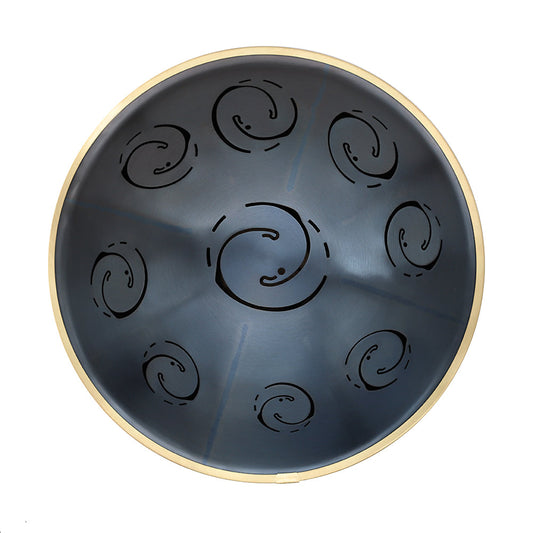

RAV Vast is a unique kind of steel tongue drum that offers a rich, resonant sound and an accessible learning curve for newcomers and seasoned musicians alike. Whether you’re completely new to hand pans and tongue drums or looking to expand your skills, this guide will walk you through techniques from basic to advanced. We’ll also cover practical tips, common pitfalls, and ways to enhance your playing with accessories. So let’s dive in and start your journey with the RAV Vast!

Getting Started: Setting Up for Success
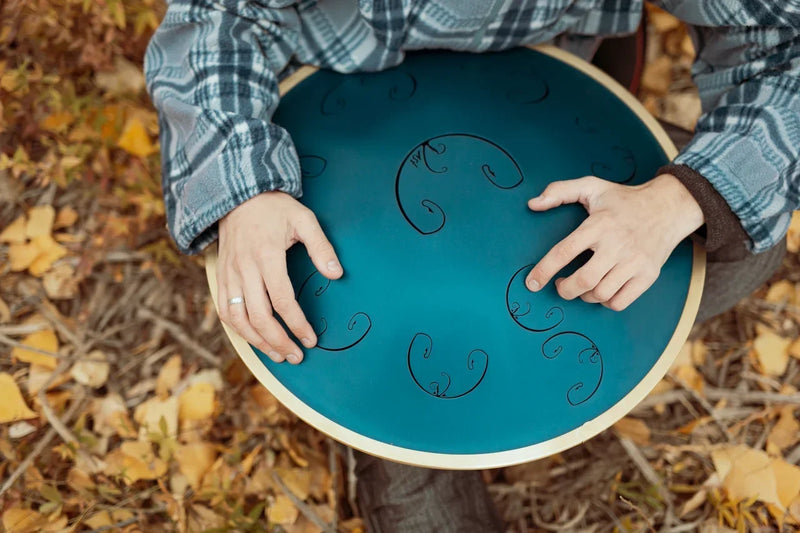
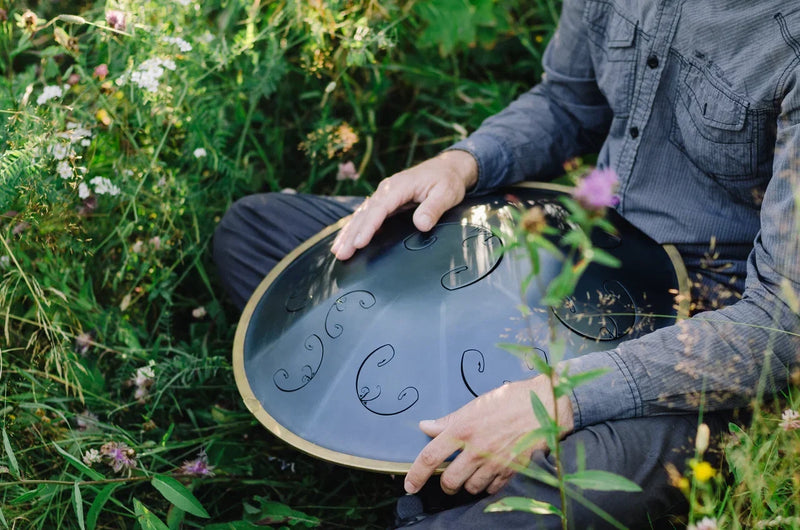
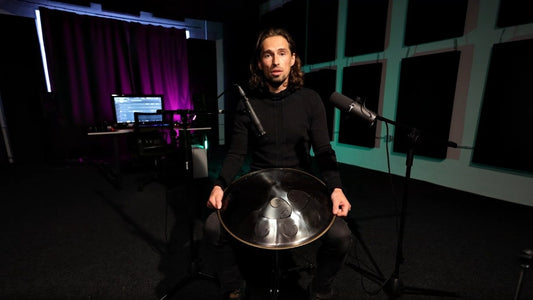
Getting started with your RAV Vast is an exciting moment. You’ve just unboxed this beautiful metallic drum, and now what? First, understand that the RAV Vast is a type of steel tongue drum. It belongs to the wider family of instruments percussion, known for their warm, resonant and meditative tones. This means you use your hands (or soft mallets) to strike the steel tongues and create melodies and rhythms. Begin by finding a comfortable playing position. Most players place the drum on their lap with the bottom of the instrument open to the air (for the sound to resonate fully), or on a stand or cushion on the floor. You can simply place the drum on your knees and it will feel stable; you’ll immediately notice the soothing vibrations as you tap it. Ensure you’re seated comfortably, with the drum slightly tilted toward you if on your lap, so you can easily see and reach all the tongues.
Now, take a moment to explore the drum. Gently tap each tongue with your fingertips to hear its note. The RAV Vast’s design pairs meditative, hypnotic, tranquil sound with an intuitive layout. Each drum is tuned to a specific scale where all notes complement each other, so you’ll find that no combination of notes sounds bad. In other words, every note sounds good together on a RAV Vast, which is hugely encouraging for beginners. Don’t worry if you have “no idea how to play steel drums” at first; learning will come naturally with a bit of practice. The key at the beginning is to get comfortable with how the drum feels and sounds.

Take your time and start small. Try using one hand (usually your dominant hand) to strike a tongue and then let the sound ring out. Swap to the other hand. In these early stages, consistency beats intensity. 5 minutes of training a day will bring more effect than 2 hours a month. Short, regular practice sessions help you acquaint your hands with the instrument. You might just improvise freely, enjoying the sounds without any structured exercise. The RAV Vast rewards even simple exploration with beautiful tones, so have fun with it!
Basic Techniques for Beginner
Once you’ve gotten comfortable with the feel of the drum, it’s time to learn some fundamental techniques for playing the RAV Vast. These basics will help you produce clear, resonant tones and simple rhythms. The most important concept in playing any steel tongue drum is how you strike the instrument. As a rule, let your fingers bounce off the tongue quickly, rather than keeping them pressed on the steel. This allows the note to ring out fully. If you leave your hand touching the tongue, you’ll dampen the vibration and choke the sound. In fact, one pro tip is to begin lifting your hand just a split-second before it makes contact, ensuring a quick rebound and clean tone. Practice this “bounce” by lightly tapping a tongue and immediately relaxing your hand will let hear a rich note that sustains, rather than a muted thud.

Using a relaxed finger stroke and bouncing off the tongue produces a clear, sustained note on the RAV Vast. Beginners should focus on developing a light, controlled touch rather than hitting hard.
Start with finger placement and hand shape. Many players use the pad of the finger (not the very tip or the nail) to strike. For a soft sound, keep your finger loose and perpendicular to the drum surface, letting the weight of your relaxed finger make the note. This will yield a warm tone. For a louder or sharper sound, you can experiment with a slight “slap” stroke. A slap involves a quicker motion using the pad or flat of your fingers (sometimes the longer side of the finger) to create a more percussive attack. The soft stroke is great for gentle melodies, while the slap stroke can accent beats or add dynamics when you need emphasis. Try alternating between these two types of touch on a single note to hear the difference.
6 Ways to Play the RAV Vast | Techniques for All Levels @AmyNaylorMusic
It’s also beneficial early on to practice using both hands. While you might start with your dominant hand, involving the non-dominant hand opens up more possibilities (just like playing piano with two hands). Begin with simple alternation: for example, play a note with your right hand, then the next note with your left, and continue alternating. This hand-to-hand practice builds coordination. You can tap that low central note with a thumb or flat finger as a steady bass pulse, and use the other hand to play higher notes in between. This creates a basic accompaniment pattern: the low note as a beat and higher notes forming a melody. Even just alternating between two or three notes can produce a pleasant rhythm. Keep a simple beat – many traditional songs use a 4/4 rhythm (four evenly spaced beats in a cycle), which is a good starting point. You can watch a RAV beginner tutorial teaching a basic 4/4 rhythm pattern below, since it’s widely used in most Western musical traditions. You can clap or count “1-2-3-4” out loud to establish the beat, and try hitting a drum tongue on each count (or on the “1” and “3” only, to start even simpler). This will train your sense of timing on the drum.
As you learn these basics, remember the golden rule: have fun and enjoy the sound. The RAV Vast is designed to be satisfying at every skill level. Don’t worry about mastering everything at once. Some days you might not feel like working on a new pattern or technique, and that’s perfectly fine. Play around and savor the soothing tones. Your brain and hands need time to remember what they’ve learned, so giving yourself relaxed play sessions actually helps cement your skills.
https://youtu.be/yxsS01lKygU?si=zDh-nLiDdIIS3uNF
Melodies and Scales for Beginners
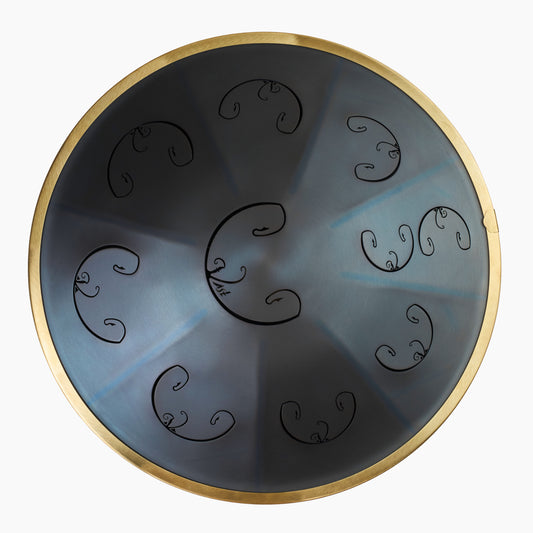
With basic strikes and rhythms underway, you’ll soon want to create simple melodies. A great exercise is to practice the scale of your RAV Vast. Most RAV drums have 8 or 9 tongues tuned to a specific scale. Find the lowest note and run your fingers up the scale to the highest, playing each tongue in order. Then go back down. This up-and-down scale practice familiarizes you with where each note is and builds muscle memory for the layout. Try to play evenly and gently at first. Once comfortable, vary the timing (e.g. play up the scale quickly, then down slowly, and vice versa).
You can also break the scale into small patterns. Play a sequence of 3 or 4 notes in a row, then shift and repeat. For example, play the first three notes of the scale (1-2-3), then start from the second note and play 2-3-4, then 3-4-5, and so on, overlapping patterns. This kind of exercise (sometimes called a “ladder” pattern) trains your fingers to move smoothly across different tongues. It also starts to create a musical phrase out of the scale, rather than just a straight run up and down.
How to start with RAV? Few tips for beginners part 1.
As you practice, be mindful of even tempo and smooth transitions. If a certain switch (say from one hand to the other, or reaching a far tongue) feels awkward, slow it down and isolate it until it’s comfortable. You might notice some notes ring longer than others or some require a slightly different touch as each tongue can have its own character.
Finally, a wonderful beginner milestone is when you can improvise a little melody on the spot. Using what you’ve practiced (scales, simple rhythms, alternating hands), try stringing together a short tune. It could be as simple as playing a favorite nursery rhyme or just a few notes that sound nice to you. The goal is to get comfortable making music without a strict plan – this builds confidence and joy. And if you need inspiration or guidance, there are excellent RAV Vast tutorials for beginners available online. For instance, educator Amy Naylor has created videos like “2 Very Easy Melody Patterns for RAV Vast” that teach simple, beautiful patterns step-by-step, which can be great to follow along with. These kinds of resources show you real-world examples of how to put basic notes and rhythms together into music. They also demonstrate the techniques described above in action, so don’t hesitate to use such tutorials as a supplement to your practice.
Intermediate Techniques to Level Up Your Playing

After you have the basic strikes and simple patterns down, you can start adding more complexity to your RAV Vast playing. The intermediate stage is all about building on fundamentals: adding new rhythm patterns, combining notes, and improving control and expression. Here are some techniques and ideas to explore as an intermediate player:
1. Combining Melody and Rhythm: At this level, you’ll want to go beyond playing one note at a time on the beat. Start experimenting with using one hand to keep a steady rhythm while the other hand plays a melody. For example, your left hand could tap a repeating bass note (like the ding or another low tongue) on the downbeats, while your right hand plays a simple melody on the higher tongues on top of that. This is a bit like patting your head and rubbing your belly. It may feel tricky initially, but it’s a powerful skill. Begin with something simple: e.g. left hand taps the ding on count 1 of each measure, while right hand plays any two or three notes during the measure. This separation of roles between hands helps create a fuller sound. You can also use two hands to strike two different tongues at the same time. Two notes played together make a chord or harmony. The RAV Vast’s tuning means most two-note combinations will sound pleasant. Try playing a low note with your left hand and a higher note with your right simultaneously; this can serve as a beautiful chord to end a phrase or add emphasis at a musical peak.
2. Expanding Rhythms: As a step up from the basic 4/4 beat, you can introduce new rhythmic patterns and time signatures. Perhaps play in 3/4 time (a waltz-like “1-2-3, 1-2-3” feel) by emphasizing the first of every three beats. Or syncopate your rhythm – this means placing hits between the main beats to create an off-beat groove. For example, instead of striking on “1-2-3-4”, try hitting on the “ands” in between counts (like 1 and 2 and 3 and 4 and). This will give a rolling, flowing feel to your playing. You can also hit the basic 4/4 groove with a slight twist: you keep a steady pulse but change which notes are accented. By shifting the accents in the pattern you already know, you can make a simple groove sound more lush and complicated. For instance, if you normally accent beat 1, try accenting beat 2 or 3 instead while keeping the others softer – the pattern instantly feels different and more dynamic. This concept of dynamics (playing some notes louder, some softer) is crucial for expressive playing. Practice adding accents or volume changes to bring out certain notes in your melodies or rhythms.

3. Roll Technique (Quick Alternating Hits): One very useful technique on tongue drums is the roll. A roll is a rapid alternation between hands (or between two fingers of one hand) on the same tongue, producing a fluttering, sustained effect. On the RAV Vast, a common approach is the two-handed roll, where you essentially drum on a single note with left-right-left-right in quick succession. To practice a roll, choose a comfortable note (often a middle note on the drum) and try drumming it rapidly: left, right, left, right… Start slowly (maybe four hits evenly spaced, LRLR) and then increase speed as you maintain even spacing. The goal is a smooth, even ripple of sound. It might sound uneven at first, but as you get the hang of the rebound and timing, the notes will blur together pleasantly. Rolls are great for ending a phrase (like a flourish on the last note) or for creating a drone under a melody.
Simple Roll. RAV Vast Blog #57
4. Greater Musicality – Phrasing and Emotion: Intermediate playing is not just about technique, but also about making your music more expressive. This comes down to phrasing (how you shape a sequence of notes) and playing with feeling. Think of your notes as forming sentences or stories. Practice playing a simple melody in different ways (loud vs. soft, fast vs. slow, short vs let ring). Notice how each variation changes the mood. The RAV Vast is well-suited for meditative, soothing music, but it can also be lively. If you feel “stuck” in a slow, meditative style and want more excitement, try the accent-shifting trick mentioned above or add a few slap strokes for punch. You can also incorporate pauses. As you progress, you’ll develop your own style. Try learning a favorite song on your RAV if you can, or jam along with backing tracks. This is the stage where finding what moves you on the instrument really becomes important. The techniques are just tools to help express yourself on the RAV Vast.
Advanced Techniques and Creative Exploration
Once you’re comfortable with intermediate skills, you can venture into advanced techniques that fully unlock the percussive and harmonic potential of the RAV Vast. Advanced playing often means pushing the boundaries of what the instrument can do with unconventional strikes, faster rhythms, and more complex musical ideas. Here are some advanced techniques to explore:
1. Percussive Hits (Beyond Fingers): Advanced players incorporate a variety of striking surfaces to get different sounds. For example, you can use not only your fingertips, but also your knuckles, palms, or even elbows to strike the drum. Knuckle knocks on the steel can create sharp, snappy clicks. A closed fist can produce a deep thump (the RAV is very durable, so don’t worry –it won’t get harmed by reasonable force). Using the side of your thumb or the heel of your palm on the drum’s shoulder (the rim or area between tongues) yields a short, muted thud that’s great for a backbeat. In fact, hitting areas other than the tongues, like the spaces between them or the outer rim, produces muffled percussion sounds that can serve as ghost notes or to separate musical phrases. For instance, a tabla stroke using finger tip vs. finger flat can translate into different RAV sounds. By treating the RAV as both a drum and a melodic instrument, you unlock a whole new dimension of performance.

2. Muting and Ghost Notes: Earlier we emphasized letting notes ring, but advanced players also strategically mute notes to get short or ghost notes. A ghost note is a very quiet, subtle note often used as a rhythmic filler. On a RAV Vast, you can create one by lightly tapping a tongue with a finger that stays on the steel, immediately damping it. This produces a soft “thud”. You can also partially cover a tongue with one hand while striking it with the other to modulate the sustain or pitch. One common advanced pattern might mix normal ringing notes with quick muted taps in between, creating a dynamic, tightly controlled groove. For example, strike a note normally on the beat, then do a muted tap (ghost) off-beat, alternating so you have a strong note followed by a soft note – this adds complexity and “swing” to the rhythm.
3. Speed and Triplet Rhythms: As you advance, you’ll likely increase your playing speed for certain passages. A good way to build speed is practicing triplets and rolls. Triplets are three notes in the space of one beat (giving a galloping feel). You can play triplets by alternating hands in a quick LR-L pattern. To work on speed and precision, use a metronome or tap your foot to a beat and try fitting multiple evenly-spaced hits per beat (start with two per beat – eighth notes – then three – triplets – then four – sixteenth notes, etc.). Ensure that as you speed up, you maintain the relaxed, bouncing hand technique. It’s better to have slightly quieter, controlled fast notes than to try to hit hard and lose evenness. Over time, your hands will get used to the faster motions and the sound will remain clear.
4. Exploring Harmonics: The RAV Vast famously has rich harmonics (each tongue produces multiple overtones). Advanced players sometimes exploit this by striking specific parts of a tongue or using lighter touches to isolate higher harmonics. For example, a very gentle tap near the edge of a tongue might emphasize a higher pitch overtone rather than the fundamental note. You can experiment by touching a tongue lightly at the center with one finger (without pressing hard) and striking it with another finger – this can mute the fundamental and let a higher harmonic ring out, somewhat like playing harmonics on a guitar string. It’s a subtle and challenging technique, but it’s there for those who want to delve into sound exploration. Harmonics can add shimmering textures to your music, especially in a resonant space.

At the advanced level, it’s really about mixing and matching everything you’ve learned: Combine percussive hits with rolling melodies, switch up rhythms, use dynamics extensively, and perhaps even play two RAV Vasts at once (some experts do use multiple drums in different scales to add complexity!). The sky is the limit creatively. Remember that the RAV Vast has a vast (no pun intended) expressive range – from soft, singing tones to punchy beats – and a truly advanced performance will showcase a bit of it all.
Using Accessories to Enhance Your RAV Vast Playing
While the RAV Vast is primarily designed to be played with hands, there are a few accessories that can open up new techniques and conveniences. Chief among them are mallets, as well as stands or cushions, and protective gear. Let’s look at how to use these effectively:
Using RAV Vast mallets can produce a louder, crystal-clear tone and allows beginners to play relaxing melodies with ease. Many players alternate between hands and mallets to access different dynamics.

Mallets: The official RAV Vast Mallets are a set of special drum mallets with soft heads designed for tongue drums. Using mallets on a RAV Vast yields a different sound which is louder and more bell-like with a very clear attack. This can be great for when you want more volume or a new timbre. In fact, if you are a total beginner struggling to get a good tone with your fingers, you can start with mallets. With mallets, you don’t need to worry as much about finger form; you can strike the tongue similar to how you’d play a xylophone or marimba, and you’ll get a clean sound. That said, mallets do have some limitations. Because you’re holding sticks, it can be harder to play two notes at once (like chords), and rapid drumming techniques might be different. Important tip: use only the official RAV mallets or other soft-head mallets. Standard drumsticks or hard mallets can damage the instrument’s coating and detune it. Don’t use the usual drumsticks as they can harm the surface of the RAV drum. Mallets are also handy if you want to play for long periods without finger fatigue, or if you’re performing in a larger space and need the extra volume.
Master RAV Mallets like a GOD // by Edward Lightseeker
Stands and Supports: Another accessory to consider is a stand or support ring. While many people play with the RAV on their lap, you might sometimes want to play on a stage or floor. There are stands (often tripod stands or wooden stands) that can hold a tongue drum at a convenient height. You can also use a simple ring (even a rolled-up towel in a circle or a cushion with a dip) on a table or floor to sit the RAV Vast on. The main thing is to keep the bottom hole mostly free so the sound isn’t muffled. Playing on a stand has a couple of benefits: it lets the sound project more (since nothing is touching the bottom), and it allows you to play standing up or share the instrument in a jam session easily. The feel is slightly different than lap playing but it can be very comfortable once you adjust. Some stands even allow the drum to tilt towards you at an angle, which can be ergonomic. If you’re performing, a stand is almost a must-have so the audience can hear the best sound.
Protective Accessories: While not directly affecting playing technique, it’s worth mentioning bags/cases and other protective gear. RAV Vast drums are investments, and taking care of them means you’ll always get the best sound. A padded RAV Vast bag allows you to transport your drum safely to outdoor jams, yoga sessions, or lessons. They won’t change your technique per se, but having confidence that your instrument is safe will let you play with more peace of mind. Lastly, if you use mallets, be sure to store them properly (they often come in a set). The mallet heads can wear out over time, so inspect them and replace if they get too hard or dirty, to avoid scratching the drum.
Common Mistakes and How to Avoid Them
Learning any musical instrument involves trial and error. Here are some common mistakes new RAV Vast players make, along with tips on how to avoid them:
Heavy-Handed Striking: Beginners sometimes think hitting the drum harder will make it sound better or louder. In truth, the RAV Vast responds best to a light, relaxed touch. Striking too hard can produce a harsh sound or even cause an unwanted metallic buzz. It can also tire out your hands quickly. Remember,to let the instrument do the work. A gentle bounce will already create a full tone. If you need more volume, rather than muscling it, try using mallets or amplifying acoustically (playing in a resonant room or using a microphone).
Lingering Fingers (Dampening the Sound): This is a very common habit to unlearn. If you find that your notes sound short or muted, check if your fingers are accidentally staying on the tongue after a hit. Even a split second of contact after the strike will stop the vibration. Make a conscious effort to bounce off as we discussed. Practicing the “hot surface” analogy can help: imagine the drum is a hot object so as soon as you touch it, you reflexively pull your hand back. This will train you to strike quickly and retract, allowing the note to ring. Over time, this becomes second nature and you’ll get consistently resonant sounds.

Using Only One Hand: Some self-taught players start doing everything with one hand (especially if that hand finds the sweet spots easily), leaving the other underutilized. This limits your speed and the patterns you can play. It can also cause fatigue in that one hand. Make sure to practice evenly with left and right hands. If one hand feels awkward, devote extra practice to it – for instance, try playing scales starting with your non-dominant hand, or play a familiar pattern mirrored (what your right hand used to do, have the left hand do instead).
Rushing Complexity: Enthusiasm can lead some players to jump into advanced songs or techniques too soon, resulting in frustration. It’s important to build a solid foundation. If you find a certain pattern too difficult, break it into simpler parts. Slow it down and only speed up when you can play it cleanly. Don’t feel bad about revisiting basic exercises periodically. Even advanced players warm up with simple scales and rhythms.
Neglecting Musicality: Sometimes we get so fixated on technique (hitting the right notes, playing the correct rhythm) that the music becomes mechanical. Remember that the goal is to make music, not just execute patterns. Avoid the mistake of playing on autopilot without listening. Instead, always listen to the sound you’re producing. Are the notes ringing? Is the rhythm steady and does it groove? Are you conveying the mood you want (be it soothing, joyful, or somber)? Record yourself occasionally, and you might catch areas to improve, like timing issues or notes that you consistently hit too hard.

Ignoring Care and Maintenance: A well-maintained drum sounds its best. Common oversights include playing with dirty or wet hands (which can affect the coating or cause rust over time) and forgetting to wipe down the drum after playing (finger oils can accumulate). Follow basic care tips: keep the drum dry, clean, and avoid extreme temperatures. Also use the bag when transporting. While this isn’t a playing technique, it’s a part of being a responsible player.
Final Thoughts: Enjoying the Journey
Playing the RAV Vast is a journey of continual discovery. The warm and inspiring character of the RAV Vast will meet you wherever you are in skill, providing a canvas for expression.
As you practice, stay curious, be patient, and always play from the heart. Remember to have fun and celebrate small victories. Let’s say you played a clean scale, tomorrow you might compose a little tune, and next month you might jam with a friend or record a short video of your progress. And whenever you seek inspiration or guidance, seek resources (from community forums, to Amy Naylor’s wonderful video lessons, to RAV’s own library of tutorials and user stories).
In summary, embrace the learning process, avoid common pitfalls, use accessories if they help, and most importantly, trust your own creativity. Playing the RAV Vast is a rewarding experience that will deepen your musicality and bring peace to you and those who hear you.