
Speaking the Language
Imagine picking up a beautiful RAV Vast steel tongue drum for the first time, excited to play, only to hear experienced players toss around jargon like “fundamental notes” and “Helmholtz resonance.” For a beginner, these steel tongue drum terms can sound as foreign as a new language. You’re not alone, terminology in the tongue drum community can indeed be confusing at first. But fear not! This tongue drum glossary is here to help you make sense of it all in a friendly, beginner-friendly way.
Steel tongue drums are famously approachable because they’re affordable, portable, and easy to play. Yet, like any musical craft, they come with their own vocabulary. Understanding these terms will deepen your appreciation of this melodic percussion instrument and boost your confidence as you explore its peaceful tones. In this guide, we’ll break down the main concepts and terminology you’ll encounter, especially as they relate to popular RAV drums. Think of it as a percussion glossary tailored to steel tongue drum enthusiasts: from the instrument’s anatomy and sound/tuning concepts to playing techniques and related instruments. By the end, terms like “fundamental,” “sustain,” or “pentatonic scale” will feel like old friends rather than intimidating jargon.
Let’s dive into the essential vocabulary of steel tongue drums. To keep things clear, we’ve organized this glossary by theme,covering the parts of the instrument, sound and tuning terms, playing techniques, and even related instruments. Whether you’re a new RAV Vast owner or just curious about melodic percussion, this glossary will help you speak the language of the steel tongue drum world with confidence.
The Glossary (Organized by Theme)
(Below, we group key terms into four themes for easier learning.)
Theme 1: The Instrument’s Anatomy
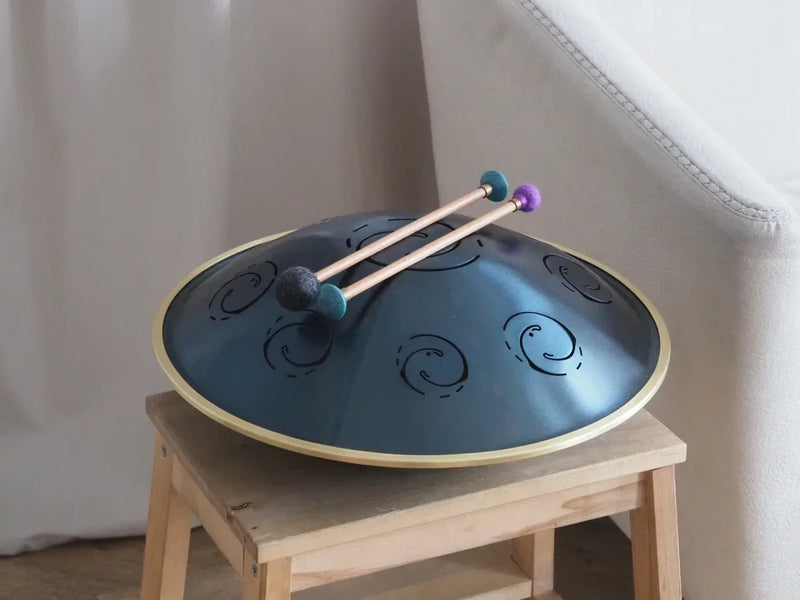
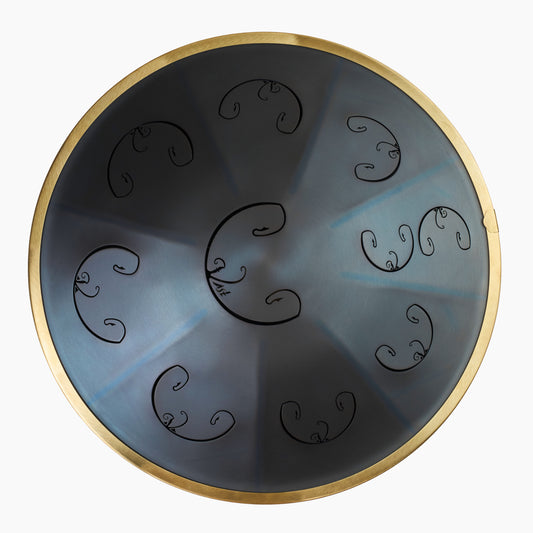
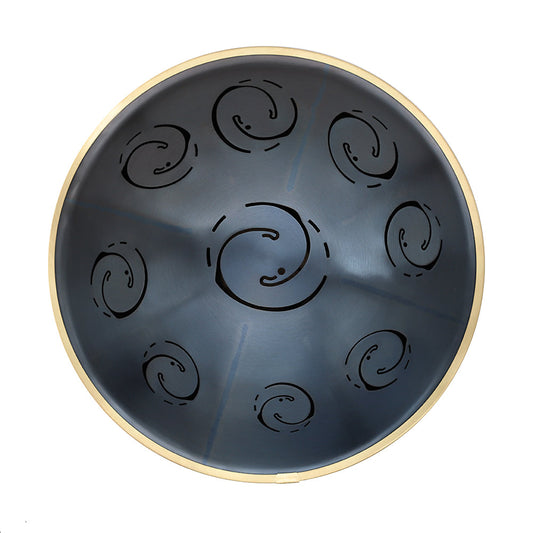
- Tongues (Notes/Keys): The tongue is the cut-out steel piece on the drum that vibrates to produce a note. They are basically the “key” of the steel tongue drum. The instrument gets its name from these tongue-shaped cuts. In a way, the tongues are like the individual strings of a guitar or the keys on a piano, allowing the drum to create rhythms and melodies. Each tongue is tuned to a specific note, and its weight, width, and length determine that note’s pitch. Striking a tongue (with a finger or mallet) makes it vibrate and produce a clear, bell-like tone. Many steel tongue drums have around 7 to 10 tongues arranged in a circle, often with the lowest-pitched tongue positioned toward the player. (RAV Vast drums, for example, feature a set of tongues around a central tongue or “ding” note, giving a rich range of notes.) When you hit more than one tongue at once, you’re effectively playing a chord (a combination of notes). The RAV Vast is renowned for its uniquely designed tongues that can even produce multiple harmonically rich tones from a single strike, creating a lush, layered sound. In short, the tongues are the heart of the instrument and without them, there’d be no music!
- Shell/Body: The shell (or body) is the round metal chamber that gives the drum its characteristic “UFO-like” shape and houses the tongues. Most steel tongue drums are made of two metal half-shells welded together to form a hollow resonating chamber. This body acts as an amplifier and resonance chamber for the vibrating tongues. In fact, the drum’s shell amplifies the sound produced by the tongues and lets it project outward through the tongue slits. A well-designed body contributes to a fuller, cleaner sound. For example, RAV Vast drums have an innovative body design (with internal support ribs) that ensures even the high overtones aren’t dampened by the chamber, keeping the sound bright and clear. It’s also the part you’ll often rest on your lap or stand while playing, so its solidity and finish (see “Finish” below) make a practical difference.
- Central Port/Sound Hole: Many steel tongue drums feature a sound hole or central port. It is an opening in the shell that lets air move in and out as the tongues vibrate. This might be on the bottom or sometimes in the center of the top shell. The sound hole is important for the instrument’s resonance; it’s similar to the sound hole on a guitar. Thissound hole helps create a Helmholtz resonance – a deep, bassy “oom” sound that you might hear when you strike certain notes or the drum’s shell. For instance, tapping near the central hole can excite the air in the cavity to produce a bass tone. The sound hole also allows the lush sound of the tongues to escape the chamber freely. In short, the central port is the drum’s breathing hole and it enriches the overall sound by adding depth and helping project the notes outward.
- Finish: The finish of a steel tongue drum refers to the outer coating, paint, or treatment on the drum’s metal surface. It’s both an aesthetic and a practical aspect of the instrument’s anatomy. On the practical side, metal drums are often sealed with protective coatings to prevent rust and scratches. For instance, many steel tongue drums have a corrosion-resistant paint or lacquer that keeps the drum looking new and also guards against moisture or sweat from your hands. Some, like the RAV Vast drums, even use special finishes such as a durable hydrophobic coating (water-repellent) to make maintenance easy. On the aesthetic side, the finish gives the drum its color and shine. While finish doesn’t drastically change the sound, it can have a minor effect (for example, a very thick coating might slightly soften the tone). Most importantly, a good finish means you can focus on playing your drum for years without worrying about rust or wear. So, when someone mentions the drum’s finish, think of the look and protective coat on its shell and the blend of form and function that keeps your instrument both pretty and protected.
Theme 2: Sound & Tuning
- Scale (Pentatonic, Diatonic, etc.): In music, a scale is an ordered sequence of notes arranged by pitch, usually within an octave. Steel tongue drums are tuned to specific scales, which give each drum its particular mood or flavor of sound. Two common terms you’ll hear are pentatonic scale and diatonic scale. A pentatonic scale has five notes per octave. These scales are popular in tongue drums because every note sounds good with every other, so you can’t hit a wrong note. This is one reason tongue drums are so user-friendly for beginners. If your drum is tuned to, say, an A minor pentatonic scale, any combination of tongues will produce a pleasant harmony. A diatonic scale, on the other hand, has seven notes per octave (like the major or natural minor scales familiar from Western music). Diatonic drums include more tones, offering a fuller palette but requiring a bit more care to avoid dissonance. Some steel tongue drums are also tuned to chromatic scales (which include all 12 semitones in an octave) or exotic scales like Akebono, Hijaz, etc., but pentatonic and diatonic are most common for beginners. The RAV Vast drums come in many scales (Kurd, Celtic, Major, Minor, etc.), each giving a unique mood and label models by scale and key (for example, “B Celtic Minor”). When choosing a drum, knowing the scale tells you what kind of melodies you’ll get. In summary, scale is the musical recipe of notes your drum can play. While pentatonic scales are great for free-flowing, meditative play, while diatonic scales add the familiar richness of major/minor keys.
- Fundamental Note: The fundamental note is the primary pitch of a tongue or the drum’s scale. It is essentially, the main note you hear. If you strike a tongue, the lowest (strongest) frequency it produces is called the fundamental. It’s like the root of that note’s sound. In the context of an entire drum, people sometimes refer to the drum’s lowest note (often the largest tongue) as the fundamental or “root note” of the drum’s scale. This is often the note the whole scale is built around. In tongue drum terminology, the center note (ding) is usually the fundamental of the instrument’s scale (for instance, a D Kurd has D as the ding, the fundamental of the scale). To put it simply, if someone says “this drum’s fundamental is C#,” they mean the drum is tuned so that C# is the base pitch (usually the lowest tongue) and the scale is built from there. Understanding the fundamental is important for tuning and for knowing the range of your instrument. It’s the solid foundation of each note’s sound, the frequency you’ll hum if you try to match the pitch of the tongue by voice.
- Harmonics/Overtones: Harmonics (or overtones) are the subtle higher-pitched tones that ring alongside a note’s fundamental pitch. Every time you strike a tongue, you’re not only hearing the main note (fundamental), but also a whole series of faint higher tones that are mathematically related to that fundamental. In physics terms, harmonics are vibrations at whole-number multiples of the fundamental frequency. In musical terms, they add color and richness to the sound. These overtones occur naturally; you don’t have to do anything special to get them, though advanced players sometimes isolate harmonics by striking specific spots on a tongue. The RAV Vast drums are famous for having strong, tuned harmonics. Each tongue can produce 4–7 harmonic overtones in harmony, giving it a rich, chorus-like effect. Harmonics are why a steel tongue drum can sound ethereal or bell-like; the blend of tones creates a complex, soothing sound rather than a simple pure note. So, when we talk about overtones, we’re talking about those hidden notes within the note – the reason a chord played on a tongue drum can seem to sparkle. Musically, overtones correspond to intervals like octaves, fifths, thirds, etc., above the fundamental. Being aware of harmonics can help you appreciate your instrument’s craftsmanship (good makers, like RAV, carefully tune tongues so the harmonics are pleasant). It’s not necessary to master the physics, just know that harmonics = the secret ingredients that make each note on your drum sound alive and warm.
- Sustain: Sustain refers to how long a note continues to ring after you’ve struck the tongue. If you hit a tongue drum and the note rings out for several seconds, that note has a long sustain. Steel tongue drums (especially high-quality ones like RAV Vast) are known for their beautiful sustain and how the notes resonate and sing for a good while, creating a calming, lingering sound. In sound terms, sustain is essentially the length of the “ring” before the sound decays into silence. You can think of it as how long the note lasts. For instance, a piano has pedals to increase sustain by lifting the dampers; on a tongue drum, the sustain is built into the design (material, thickness, shape) of the tongues and shell. When we call handpans “singing steel,” we’re talking about that combination of resonance and sustain and the instrument’s ability to hold a note. If resonance is the immediate ring you hear at the moment of striking, sustain is how long that ring continues. A longer sustain is often desirable in meditation instruments and sound healing instruments because it gives a continuous, soothing tone that fills the space. If you prefer a crisper, short note, you can control sustain by damping (see “Damping” under techniques). But generally, one joy of these drums is to strike a note and just listen as it gently fades out over time. Quick tip: If you’re shopping for a drum or comparing, listen to the decay of each note. A “long mellow sustain” is a hallmark of a great tongue drum. It means each note will hang in the air, allowing chords and overtones to overlap beautifully.
- Decay: Decay is essentially the flip side of sustain – it describes how a sound fades away after the initial strike. A note’s decay is the rate at which it diminishes in volume. On a steel tongue drum with long sustain, you’d say it has a slow decay (the sound takes longer to die out). If the sound stops quickly, that’s a fast decay. In practical terms, you don’t usually need to quantify decay on your drum; instead you’ll feel it. For instance, a tongue drum note might start loud and then gently decay over 5-6 seconds until it’s silent. If you dampen a tongue right after hitting it, you create an immediate decay because the sound cuts off. Musicians sometimes talk about listening to the “resonance and decay” of each note to fully appreciate an instrument. By incorporating muting techniques, you can also control the decay while playing: for example touching the tongue can stop the note. Generally, tongue drums have a smooth decay, meaning the sound reduces gradually and cleanly. As a beginner, it’s enough to know decay as the natural fade-out of a note. It’s In short: sustain and decay go hand in hand. Sustain is how long it holds, decay is how it fades. Together, they shape the serene ringing character of your drum’s sound.
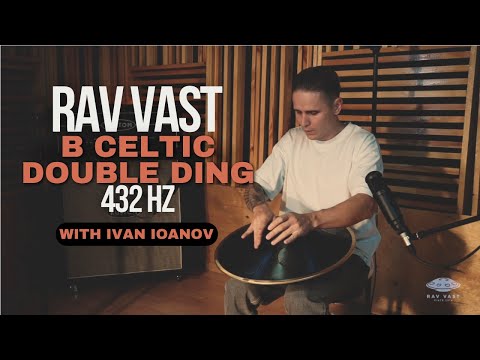
- 432 Hz vs. 440 Hz: These numbers refer to tuning reference frequencies (basically the pitch standard used to tune the drum) 440 Hz is the standard modern concert pitch, meaning the note A4 is tuned to 440 vibrations per second. Most Western instruments use 440 Hz as the reference. 432 Hz is an alternative reference pitch (A4 tuned slightly lower) that has gained popularity in wellness and musical circles for its purported calming qualities. Some steel tongue drums, including certain RAV Vast models, are available in 432 Hz tuning. What does this mean for you? If a drum is “432 Hz,” all its notes are tuned relative to A4 = 432 Hz, so every note will sound just a hair lower than the same drum tuned to 440 Hz. The difference is subtle to most ears and a 432 Hz tuned instrument sounds a touch warmer or softer in comparison. Many find music in 432 Hz to feel more relaxing, which is why sound healing practitioners and meditation enthusiasts often seek out instruments tuned to 432. Meanwhile, 440 Hz is the everyday standard that most music is tuned to. Neither is “right” or “wrong”, it’s a matter of preference. If you plan to play with other instruments, 440 Hz tuning might blend in more easily since that’s common. If you’re playing solo for yoga, meditation, or personal enjoyment, you might love the vibe of 432 Hz. In essence, 432 vs 440 is a tuning choice: 440 Hz being the familiar modern standard, and 432 Hz offering a slightly different feel often described as more harmonious and calming.
Theme 3: Playing Techniques
- Mallets/Sticks: One of the joys of a steel tongue drum is that you can play it with mallets or with your hands,each method gives a different feel and sound. Mallets (also called drum sticks or beaters, usually with a rubber or felt tip) are often provided with the drum. Playing with mallets tends to produce a louder, clearer attack and a very resonant sound. The rubber mallet heads bounce off the steel tongues quickly, which helps each note ring freely without damping. This is why mallets can draw out a deeper sustain and strong tone from the drum. Beginners usually find using mallets easier at first, since you can simply tap the tongues and get a nice sound (much like using a xylophone mallet). The most notable difference when using mallets is volume. The drum will sound significantly louder and project further. This can be great for performance or if you want the notes to really sing out. On the flip side, some players feel mallets give less intimate control; you’re a bit removed, as if playing piano vs. plucking a harp. Overall, mallets are a fantastic way to explore your tongue drum’s sound spectrum, especially for beginners and for when you want maximum resonance.
- Hands/Fingers: Playing the steel tongue drum with your hands is a more tactile, expressive technique. Instead of using tools, you strike the tongues with your fingertips, thumbs, or even the sides of your hands. This method can feel very rewarding because you physically connect with the instrument’s vibrations. Playing with hands produces a softer, warmer tone compared to mallets. You can achieve a wide range of dynamics from gentle, whispery taps to stronger hits. You can rapidly switch between notes using different fingers. Hand-playing gives you more freedom and a deeper connection to the drum. However, it’s also a bit more challenging to get clear, loud notes at first. You’ll need to experiment with striking techniques: many players use the padded part of their fingertip (not the very tip with the nail, and not too flat). It might sting a tiny bit until you develop the touch, but with practice you’ll get bright tones even with fingers. One common beginner tip is to use rubber finger caps or finger picks. These are little sleeves that go over your fingers to protect them and add a bit of bounce. They allow you to play with finger technique while getting volume closer to a mallet strike. Using finger pads or thumbs can also let you do things like glides and quick trills that mallets can’t. In summary, playing with hands vs. mallets is a personal choice: hands give intimacy and nuanced control, mallets give ease, volume, and clarity. Try both and see which resonates with you (pun intended)!
- Damping (Muting): Damping is a technique to control or stop the sound of a tongue immediately after striking it. The idea is simple: you lightly touch the vibrating tongue with a finger (or your palm) to silence it or shorten its ring. This is also called muting. Why would you want to do that? For musical expression! For example, you might hit a tongue and then quickly press on it to get a short “ding” sound instead of a lingering tone. This can make faster melodies sound clean. Many players use damping creatively to add variety to their playing. As a beginner, you can practice damping by striking a note with one hand and almost simultaneously touching the tongue with the other hand or remaining fingers. It’s like a quick tap-then-touch motion. Done right, the note will sound then immediately go quiet. You can also damp all tongues at once by resting your palm on the drum, which stops any resonance. Damping is crucial when playing faster songs or when you want to emphasize rhythm over harmony. By learning to damp, you add a new dimension to your performance. Now you can choose when a note should ring out or stop dead. It’s like having a “stop sound” button at your fingertip. Practice it slowly, and soon it will become an intuitive part of your technique.
- Roll: In percussion, a roll is a rapid succession of hits on a drum that creates a continuous sound, and steel tongue drums are no exception. A roll allows you to sustain a note or create a drone by hitting it repeatedly and quickly. On a tongue drum, you can perform rolls with either mallets or fingers. For example, a common approach is the “finger roll,” where you lightly bounce alternating fingers in a ripple across a tongue (or across multiple tongues) to generate a fluttering stream of notes. In steel tongue drum terminology, a roll is any technique that lets notes be played in quick succession. There are various types: a simple single-stroke roll might involve alternating hands or fingers (right-left-right-left in a rapid pattern) on the same tongue or different tongues. A one-hand roll might involve drumming the fingers of one hand in sequence on a tongue. There are even advanced “finger nail rolls” on handpans using the nails to get a very fast sequence.If you strike once you get one note, but if you roll, you’re essentially re-triggering the note so fast that it sounds almost continuous. This is useful if you want a note to last even longer than the natural sustain, or if you want to add a dramatic effect. Beginners can start practicing rolls with mallets: try alternating left and right mallet on the same tongue evenly and the resulting sound will be a smooth hum that extends as long as you keep the roll going. With fingers, a popular move is the triplet roll, where you use three fingers in quick succession (say index, middle, ring as one unit, then repeat) and this produces a rapid trill. The RAV Vast community often teaches rolling techniques for both hands to enrich playing (you might find “roll tutorials” in RAV’s learning resources). Essentially, a roll lets you sustain and connect notes in ways a single strike can’t, adding flow to your steel tongue drum music.
Theme 4: Types & Related Instruments
- Steel Tongue Drum (Tank Drum/Hank Drum): A steel tongue drum is the instrument we’ve been discussing throughout It is the melodic percussion instrument made of steel with tongue-shaped cuts that produce musical notes when struck. It belongs to the family of idiophones, which means the sound is produced by the vibration of the instrument itself (as opposed to strings or membranes). Steel tongue drums are a relatively new invention in the world of musical instruments. The first versions appeared in the late 2000s, inspired by other percussion instruments like the wooden slit drum and the metal Hang drum. In fact, one early form was nicknamed the “tank drum” because it was originally crafted from a propane tank! The story goes that in 2007, musician Dennis Havlena cut and flipped a propane tank, then cut tongue shapes into it in a cross pattern, creating a circular metal drum that he called the “Hank drum” (a hybrid of hang and tank). That was essentially the first steel tongue drum. From there, makers refined the idea into the instruments we have now. A steel tongue drum typically looks like a round metal UFO or bowl, often around 8–14 inches in diameter, with 6 to 11 tongues tuned to a specific scale. You might also hear them simply called “tongue drums” or “tank drums” or even “hank drums”. They have become very popular for meditation, yoga, and sound therapy because of their gentle, soothing tones. You’ll find steel tongue drums being played in therapy sessions, classrooms, or just at home for relaxation. They are beginner-friendly instruments in the sense that you don’t need formal training to start creating pleasant music. Just about anyone can pick one up and start improvising due to the way they’re tuned (often pentatonic). So, in summary, when we say steel tongue drum, we refer to this whole class of melodic metal drums with cut-out tongues. It’s the centerpiece of our glossary and RAV Vast is one of the top brands that has innovated within this class. If you love the sound of singing steel and want a portable, melodic percussion instrument, the steel tongue drum is what it’s all about.
- Handpan: A handpan is a cousin of the steel tongue drum, and it often enters the conversation because the two instruments share similarities in sound and use. However, a handpan does not have tongues but instead, it looks like a flying saucer with several hammered dimples or dome-like notes tuned into it. The original handpan was the Hang, created in Switzerland in the year 2000 by PANArt (Felix Rohner and Sabina Schärer). The Hang (pronounced “hung” – it’s Swiss dialect for “hand”) was essentially a steel instrument played with the hands, inspired by the Caribbean steelpan and other percussion. It had a central note (the ding) on top and a circle of tuned notes around it, plus a resonant hole underneath. The Hang was the grandfather to modern handpans, pantams, and other related “sound sculpture” instruments. Today, many artisans create handpans and these are often also called pantams or just pans. They are typically made of nitrided steel or stainless steel and have that distinctive convex saucer shape. When you hear a handpan, it has a magical, resonant bell-like sound similar in spirit to a steel tongue drum, but typically handpans have even more ringing overtones and require a specific tuning process by hammering. Handpans are usually more expensive and were historically harder to get, whereas steel tongue drums are more affordable and accessible. A key difference in terminology: handpans use terms like ding (the central note), and tone fields (the areas you strike). Steel tongue drums, by contrast, use “tongues” for the notes and don’t have a raised ding (except hybrid designs like RAV Vast which incorporate a sort of central note). Both are idiophones and both are played with hands or mallets, but the construction is different. It’s not uncommon for people to start with a steel tongue drum and later also explore handpans, since the musical approach is similar. The terms can overlap in casual use.
- Tank Drum: Tank drum is essentially another name for the steel tongue drum, especially referencing its origins. The term comes from the fact that the first steel tongue drums were made from propane tank bottoms, as mentioned earlier. When Dennis Havlena invented his version in 2007, cutting tongues into a propane tank, it was natural to call it a “tank drum”. Many early makers followed that template, sometimes using recycled tanks. Even though today’s commercially made tongue drums are often built from new steel shells rather than used tanks, the name stuck around. So if you hear “tank drum,” you can think of it interchangeably with steel tongue drum. Some people also use “tank drum” to emphasize the DIY aspect or to refer to certain brands that stuck with the tank aesthetic. So, to sum up: tank drum = steel tongue drum. The term reminds us of the instrument’s DIY roots and how something as ordinary as a gas tank could be transformed into a source of beautiful music. If you encounter older forum posts or YouTube videos from around 2007–2010, they often talk about tank drums a lot thanks to the buzz of discovering this new instrument. Today, you might hear both terms, but just know they’re part of the same family. The world of melodic percussion loves repurposing materials, and the tank drum is a shining example of creativity.
- HAPI Drum: The HAPI Drum is a specific brand and line of steel tongue drums that has become quite popular. “HAPI” stands for Hand Activated Percussion Instrument. These were developed by a company in the USA (by artisans Grahm Doe and Trish Kelly in California) and they helped bring tongue drums to a wider audience. If you see a small to medium sized tongue drum, often brightly painted, with the name “HAPI” on it – that’s a HAPI drum. They come in various models (for example, the HAPI Original, HAPI UFO, HAPI Mini) and scales. The HAPI drums were among the first mass-produced steel tongue drums that you could easily buy, starting around the late 2000s and early 2010s. The acronym is fitting: you play it with your hands, it’s a percussion instrument, and it’s certainly happy-sounding! It’s one of the instruments related to RAV Vast in the sense that they’re both steel tongue drums (though RAVs are generally larger and more complex in their overtones). Knowing that HAPI stands for Hand Activated Percussion Instrument might also save you from wondering – it’s a fun fact that underscores how these instruments are meant to be played by hand. If you ever attend a drum circle or a sound bath, don’t be surprised if a player brings a HAPI drum for its sweet, calming tones. It’s all part of the steel tongue drum family!

Your Vocabulary for a Musical Journey
Congratulations! You’ve now got a solid handle on the main terms in the world of steel tongue drums! We’ve navigated through the anatomy of the instrument, explored sound and tuning concepts, learned about playing techniques, and even distinguished related instruments like handpans and tank drums. That’s a lot of new vocabulary, so don’t worry if you don’t remember it all at once. Feel free to bookmark or revisit this tongue drum glossary whenever you need a refresher. Each time you review these terms, they’ll sink in deeper, and soon you’ll find yourself casually discussing “harmonics” or “sustain” like a seasoned RAV Vast enthusiast.
Understanding this language of melodic percussion will truly enhance your musical journey. When you know the words, you can better follow tutorials, communicate with fellow players, and appreciate what makes instruments like the RAV drum so special. Instead of seeing mysterious terms in a forum or manual and feeling intimidated, you’ll be able to say, “Ah yes, I know what that means.” It’s empowering and opens up a richer connection to the instrument. For example, knowing about fundamentals and overtones lets you listen more keenly to your drum’s sound, and understanding scales helps you choose your next drum or compose a new melody with confidence.
Remember, the goal of learning these steel tongue drum terms isn’t to sound technical but to deepen your appreciation. Each term shines a light on some aspect of how these instruments work and why they move us. And as you continue on your musical, path this vocabulary will be your trusty toolkit. It will help you get the most out of your drum and communicate your ideas to others in the community.
So keep this glossary handy as you practice and play. Over time, you’ll internalize the meanings naturally. Before long, you might even be helping another beginner understand the difference between a pentatonic and a diatonic scale, or explaining what makes a RAV Vast drum resonate so beautifully at 432 Hz. By speaking the language of steel tongue drums you’re joining a global conversation of music lovers and makers.
Your musical journey is just beginning, and now you’re equipped with the vocabulary to navigate it. Enjoy the exploration with your new knowledge. May each fundamental note you strike and each harmonic you hear bring you joy and peace. Happy drumming, and welcome to the world of singing steel!