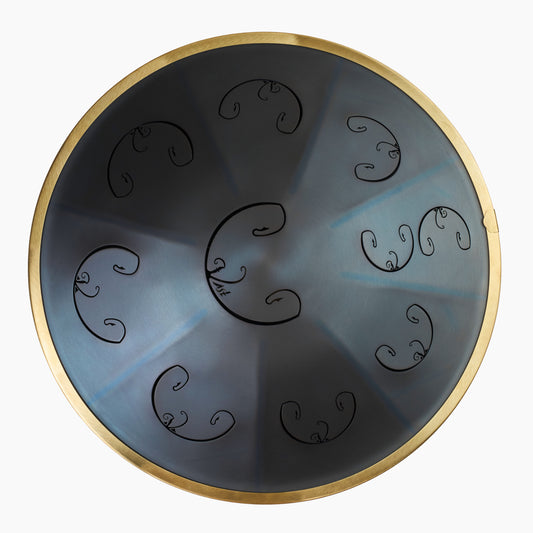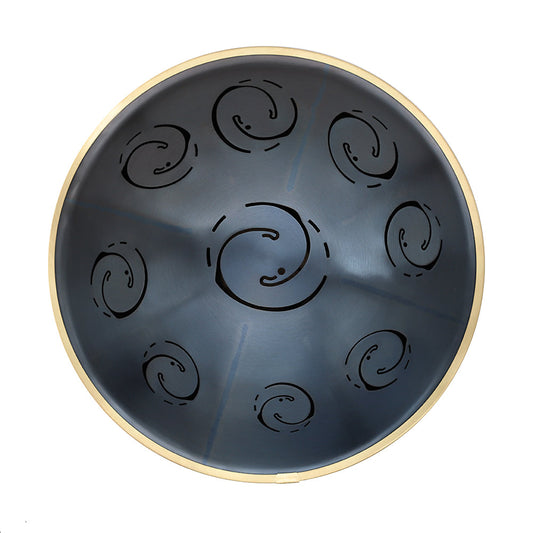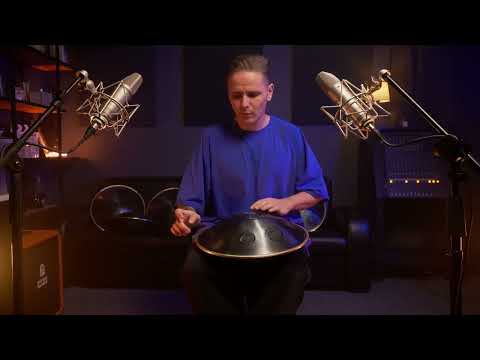

Have you ever heard the saying “practice makes perfect”? Of course, you have, probably thousands of times. You might hate it too, rightfully so. Blasting your music, practicing, and enjoying your instrument might be hard sometimes, especially in certain places.
If you’re a drummer, percussionist, or a RAV player living in an apartment, with your parents, or worse, in a thin-walled building where you have cranky old neighbors who turn the volume of the TV to 100 but come knocking at your door when you trip over the chair and step on your foot hard. Then practice suddenly feels… hard. Even like a burden.
You can take the man out of the music, not the music out of the man.
The thing is that you don’t need a full drum kit to keep practicing. Rhythm is everywhere. With a little creativity, your apartment can become a music studio, an altar of your own, a space for drum learning or meditation music instruments.
But don’t worry, because I have come to give you 4 fun, noise-friendly ways to keep practicing at home.
Hang in there, and you will come off as a winner and continue to practice your RAV at home, too!

1. Finger and Hand Drumming: Small Hands, Big Impact
Think of this as the basis of “desk drumming”. Desk drumming is something all of us do, just casually tapping or knocking our fingers on a rhythm against the surface. Sometimes willingly, sometimes unconsciously. Whatever the situation might be, congratulations, you have already practiced!
Yes, it doesn’t matter if you're just tapping your fingers on the steering wheel at a red light or drumming on your coffee table while working on a project, bravo! you’ve already started finger drumming.
It’s as simple as it sounds:
• Use your fingers or your whole hand to tap out rhythms on any surface.
Though a hard surface would produce better sound, nearly everything works. A desk, a pillow, your thigh…
✓ This way, you’re building muscle memory and sharpening your timing.
➔ Try this: put on one of your favorite songs and challenge yourself to drum along. Try to make it sound as similar as you can.

2. Body Percussion: Your Body, Your Drum Kit
Time to turn your body into an instrument! How? Pretty easy, through body percussion.
Body percussion is the art of turning yourself into a rhythm machine. Clap, snap, stomp, pat your chest, and suddenly, you’re a one-person band!
You can create your own rhythm, choose an already existing choreography, or play your favorite song.
Here’s a quick pattern to try (From my dear ChatGPT):
- Stomp your foot on beats 1 and 3,
- Clap your hands on 2 and 4,
- Snap on the “ands” between the beats.
Don’t be shy and practice everywhere! Because here’s the thing with body percussion: you don’t need music — you’re creating your own. And the best part is that you can do it anywhere! This is one of the many easy ways to get started if you want to learn to play drums or explore the steel musical instrument.

3. Apps & Digital Tools: Practice Without Making a Sound
As you saw in the second tip, I used ChatGPT to help me create a rhythm.
In the golden age of technology (so far), we can not escape it. One way or another, we always face various apps, social media, and now artificial intelligence.
But if used correctly, technology can be very helpful. In this tip, I will recommend some apps that will make your music life easier.
➢ All you need is the internet and your phone/laptop (maybe headphones too).
Now, to the apps:
- Metronome apps: The one and only. It makes the world a better place! Practicing with a click will make your timing rock solid.
- Drumming apps: Full drum sets online so that you can still play, just lower this time.
- Artificial intelligence apps: To help with almost anything. To get a new rhythm suggestion, help with notes, or teach something you’re struggling with.
- Backing track apps: Practice with virtual bands. Way more fun than practicing alone.
- Handpan online & virtual apps: Perfect for exploring steel tongue drum melodies and practicing without needing a physical instrument.

4. Secret Weapon: Everyday Gadgets
Look around. Yes, right now.
I am still waiting for you to look around.
Okay, good.
What did you see? A desk for work, a chair to slouch, a cup for your coffee, a pen to chew…?
Wrong! They are all instruments if you look close enough. Because music is everywhere, you just have to hear it or, in this case, use what you have and create it from scratch.
- Your kitchen utensil: all the plastic tools, cups, metal pots and pans,
- Pillows to practice hand/stick coordination,
- Big books that will absorb the sound,
- Pens and chopsticks as drumsticks,
- A little triangle chime as a substitute for a cymbal!
- Everyday objects can become your training tools for pan drum, steel pan, or RAV Vast drum.
- They’re also perfect for developing rhythm and flow before switching to real sound healing instruments.

In the end…
You see, dear music lover. You can practice music at home, whether you live with your parents and share a room with your little brother, have grumpy old neighbors, or have no sound insulation.
We are the only ones that stop ourselves from practicing. No more excuses. Just keep practicing because even if I hate to say it, practice makes perfect!