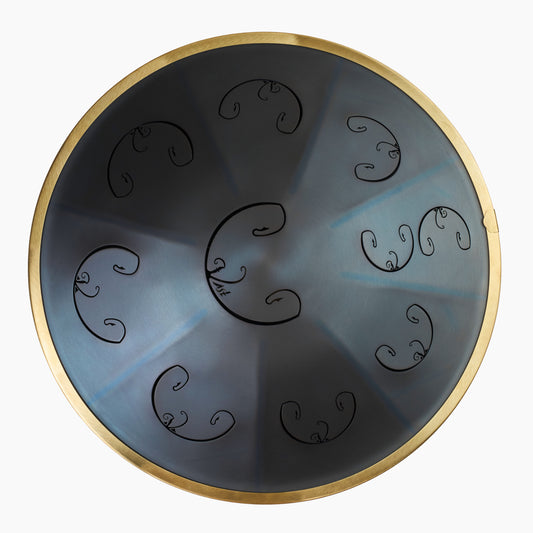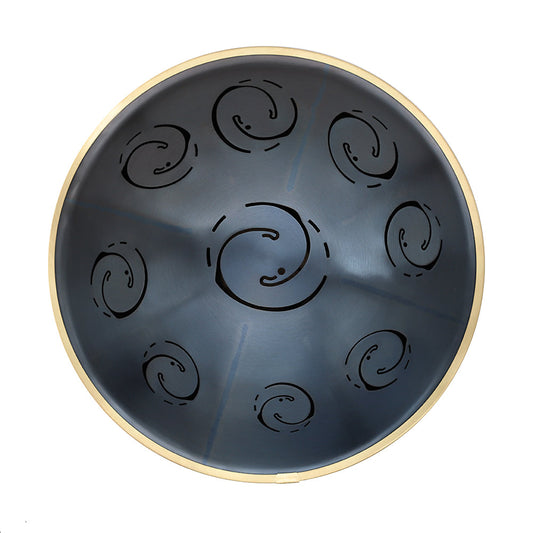

In the modern landscape of music production, the line between organic sound and digital synthesis has become increasingly blurred. When listeners first encounter the haunting and layered resonance of a RAV, they often search for hidden wires, amplifiers, or digital effect pedals. The sound is so rich, so consistent, and so full of harmonic complexity that it mimics the output of a high-end digital synthesizer. However, there is no software involved in this process. There are no algorithms or silicon chips hidden within the frame. Instead, what the listener is experiencing is a masterclass in acoustic engineering and pure physics. By applying instrument-grade precision to the manufacturing of a steel tongue drum, Andrey and his team have managed to replicate the characteristics of digital synthesis through the medium of steel.
1. The Oscillator of Steel: Understanding the V-Tip
In the world of digital synthesis, the core of any sound is the oscillator. A digital oscillator generates a waveform that can be layered with other frequencies to create a complex tone. In a traditional steel tongue drum, the tongue acts as a simple oscillator, usually vibrating at one primary frequency. This often results in a sound that feels static or thin. The RAV completely changes this dynamic through the use of Patented V-Tip Tongue Geometry. This specific design allows a single piece of steel to act as a multi-voice oscillator.
When a player strikes a V-tip tongue, the geometry forces the metal to vibrate in several distinct zones simultaneously. This is the physical equivalent of "Additive Synthesis," where multiple sine waves are stacked to create a rich timbre. Each V-tip is tuned to produce a fundamental note along with several perfectly aligned overtones. This ensures that even a single stroke provides a thick and textured sound that usually requires a digital pad or a synth lead to achieve. By engineering these vibration zones with microscopic accuracy, RAV has turned a physical object into a polyphonic sound generator.

2. The Internal Rib System: The Physical Low-Pass Filter
One of the most important components of a synthesizer is the filter, which removes unwanted noise and clarifies the tone. Without a filter, a synthesizer would sound harsh and chaotic. In the realm of acoustic instruments, this role is usually left to the natural properties of the material, which are often unpredictable. The RAV, however, utilizes an Internal Rib System to act as a physical filter. This hidden skeleton is a marvel of structural engineering designed to control the flow of sound waves within the instrument.
When you strike a standard steel tongue drum, the energy travels throughout the entire shell, causing other tongues to vibrate unintentionally. This creates acoustic interference, which is the equivalent of digital "noise." The internal rib system prevents this by isolating the vibrations of each tongue. It filters out the muddy, low-frequency rumble and the harsh metallic clanging that often occurs in lower-quality instruments. This leaves only the crystalline highs and the pure, intended notes. This level of note separation is what gives the RAV its professional, studio-grade clarity. It is the physical manifestation of a digital filter, achieved entirely through structural reinforcement.
3. The Natural Chorus Effect: Wave Interference and Harmonics
The "Chorus" effect is a staple of digital music, created by layering sounds with slight variations in pitch to create a lush, shimmering texture. Most listeners are shocked to learn that the shimmering quality of a RAV is a natural result of wave interference patterns. Because of the Stable Tuning and the precision of the V-tip geometry, the overtones produced by one tongue often interact with the vibrations of nearby tongues. This creates a natural modulation that mimics a digital chorus pedal.
This effect is only possible because of the instrument-grade precision used during the tuning process. If the notes were even slightly out of alignment, the interference would sound dissonant. However, because each RAV is tuned to a professional standard, these vibrations move in harmony. The result is a sound that feels "alive" and constantly evolving. This shimmering sustain is why the RAV is so often used in ambient music and sound therapy. It provides the same atmospheric depth as a digital soundscape but with the warmth and tactile response of a physical instrument.

4. Acoustic Reverb: The Architecture of Sustain
Digital reverb is designed to simulate the sound of a specific space, such as a cathedral or a large hall. The RAV achieves this through the sheer volume of its sustain. Due to the specific steel alloys used and the optimized shape of the vessel, the notes do not simply fade away. They linger, reflecting off the internal surfaces and reinforcing each other. This creates a natural "wash" of sound that mimics a long-tail digital reverb.
This sustain is not accidental. It is the result of thousands of hours of testing and optimization by Andrey and his engineering team. By calculating the exact thickness of the steel and the volume of the internal chamber, they have created a vessel that sustains sound longer than almost any other melodic percussion instrument. This allows a musician to play a slow, minimalist melody that still feels full and immersive. In the context of the 2026 music scene, where "lo-fi" and "ambient" textures are dominant, this natural reverb makes the RAV a more attractive option than a digital plugin.
5. Stable Tuning: The Reliability of a Digital Preset
Perhaps the most "digital" aspect of the RAV is its reliability. In the past, acoustic instruments were considered temperamental. They changed with the weather and required constant adjustment. A digital synthesizer, on the other hand, is always in tune because its pitch is determined by code. The RAV brings this "digital" reliability to the acoustic world through advanced metallurgy.
Through a specialized heat treatment process, the RAV achieves Stable Tuning that defies environmental changes. Whether the instrument is in a cold studio or a humid outdoor festival, it remains perfectly pitched. This removes the stress that usually accompanies owning a high-end melodic instrument. It functions like a digital preset; you pick it up, and it sounds exactly as it should every single time. This stability is a core part of RAV as a professional-grade tool rather than a fragile hobbyist item.
6. The Human Interface: Tactile Synthesis
Finally, the RAV mimics the "user interface" of a modern synthesizer through its Intuitive Mastery design. Each scale is engineered to be harmonically "safe," meaning there are no wrong notes. This allows the player to interact with the metal as if they were using a touch-sensitive pad on a MIDI controller. You can use your fingers, palms, or mallets to "tweak" the sound in real-time.
By gently touching the edge of a vibrating tongue, you can dampen specific overtones, effectively performing a manual "frequency sweep" like a DJ would do with a knob. This physical connection to the sound generation process is something that digital instruments often struggle to replicate. The RAV offers the perfection of a synthesizer with the soul of a handcrafted object.

The Future is Analog-Digital Hybrid
The RAV represents a new era where the best qualities of digital synthesis are captured within a purely physical form. Through the Patented V-tip Geometry, the Internal Rib System, and Stable Tuning, RAV is an instrument that sounds like the future. It offers the complexity of a software suite with the durability of professional hardware. RAV stands as a reminder that with enough engineering precision, the ghost in the steel can sound every bit as magical as the code in a machine.