
Human beings have an inherent sense of rhythm. From the steady thump-thump of our heartbeat to the cadence of our footsteps, we are literally in tune with percussive patterns before we even pick up an instrument. It's no wonder that many people find drums and other percussion instruments to be the easiest and most intuitive way to start making music. Among these, melodic percussion instruments like the steel tongue drum (such as the popular RAV Vast model) stand out as especially accessible. They blend rhythm and melody in a way that feels natural and deeply satisfying, even for total beginners. In this article, we'll explore why percussion instruments (particularly melodic ones like the RAV Vast) are arguably the most natural and accessible tools for anyone to begin their musical journey. We'll look at how our bodies are rhythmically wired, why drumming feels intuitive, how instruments like steel tongue drums enable easy melodic play, and the emotional benefits of connecting with music through rhythm.
Rhythm Is in Our Nature
Long before we ever touch a musical instrument, rhythm is already a part of us. Our bodies function on rhythmic cycles: the beating of the heart, the in-and-out of breathing, and the alternating steps of walking. Even as infants, humans respond to rhythm, studies show that newborn babies can detect a musical beat just days after birth. This innate sense of timing and pulse means that when we encounter drumming or percussion, it feels familiar rather than foreign. Tapping our feet or clapping along to a song happens almost automatically, because keeping a beat is essentially built into our biology. Even toddlers will instinctively bounce or clap along to music before they can speak, highlighting how deeply rooted rhythm is in us. In a very real sense, we are born to groove.
Because of this natural inclination, percussion instruments feel like an extension of the human body. If you think about it, the simplest percussion instrument is the body itself. Snapping fingers, clapping hands, or patting on our chest can produce a basic beat. This primal connection between the human body and rhythm lays the foundation for all music. When you start with a drum or any percussive instrument, you're aligning an external object (like a drum head or a wooden surface) with the internal rhythms you already know. The learning curve flattens significantly, because you’re not learning how to create a sound from scratch, you’re channeling sounds that are already inside you.

Percussion: Humanity's First Music
Throughout history, percussion has been the foundation of music. Anthropologists often suggest that the very first musical instruments were percussive (aside from the human voice, think of our early ancestors drumming on logs, clapping stones together, or stamping their feet around a fire. It's easy to see why. To create a drum, you don't need intricate craftsmanship or advanced theory; you just need something to hit and a sense of rhythm. A simple hand drum made from an animal skin stretched over a hollow log could produce a beat for dances and rituals. From African djembe circles to Native American frame drums to Asian taiko drums, virtually every culture on Earth developed its own hand drum instruments and percussion traditions. This universality is a testament to how instinctive drumming is to humanity.
Percussion instruments also historically served as tools for communication and community. The beat of a drum could send signals across distance or unite people in celebration and ceremony. Unlike many melodic instruments which often required specialized training or craftsmanship (like carving a flute or learning a string instrument), a drum invites participation from anyone. You don't need to read music to play a hand drum instrument, if you have a heartbeat, you can drum. People of all ages and backgrounds can grab a percussion instrument and join in, whether it's by clapping along or banging on a makeshift drum. The approachability of drums helped music flourish as a communal, shared experience long before formal music education existed.
Even in more recent times, new forms of percussion have continued to emerge and captivate us. The Caribbean steel drum, for example, turned an oil barrel into a tunable musical instrument (the famous steelpan instrument of Trinidad). This innovation showed that even a humble percussive object can evolve to carry melody. Inspired by such ideas, modern inventors created instruments like the Hang drum instrument in the early 2000s (a dome-shaped drum that produces enchanting melodic tones when struck with the hands). Similarly, the development of the steel tongue drum (with models like the RAV Vast) further proves that percussion is not just primitive noise, but a sophisticated and evolving branch of music. These melodic drums are the latest chapter in humanity’s long love affair with rhythm.

Intuitive and Accessible for Beginners
One of the greatest advantages of starting with percussion is how intuitive it is. With a drum or shaker, there is no complex technique required to get a sound. You simply strike, shake, or tap and instantly hear the result. This immediate feedback makes learning rewarding from the very first try. By contrast, think of a violin or trumpet: a beginner might struggle for weeks just to produce a clean note. But give that same person a hand drum, and within minutes they can create a steady beat. That sense of instant success is incredibly encouraging. It turns practice into play. In fact, many music teachers introduce young students to rhythm first, precisely because anyone can pick up basic drumming so quickly.
There’s also a forgiving quality to percussion. If you slightly miss a beat, it doesn’t derail the music, sometimes those little variations even add character. You’re not worrying about hitting the "wrong" note as you would with a piano or guitar. This low-pressure learning environment helps beginners overcome the fear of making mistakes. You don't need to know music theory to start exploring; you can learn to play drums in a very organic way. For example, you might begin by simply matching your drumming to the tempo of your breathing or heartbeat. From there, you naturally find patterns that feel good. Many beginners are amazed at how they can improvise a pleasant rhythm without any formal training.
Physical connection is another key. Percussion is a full-body experience. You often play a hand drum instrument with your hands directly, feeling the vibration with each hit. This tactile feedback reinforces the sense of connection between you and the sound. There’s no correct or incorrect way to explore. The instrument invites you to experiment. Because of this open, accessible design, percussion instruments are frequently recommended for beginners and even used in music therapy to help people connect with their innate musicality.
Melodic Percussion: Handpans and Steel Tongue Drums
Up to now we've talked about rhythm, but percussion instruments aren't limited to just beats. Some of the most captivating beginner-friendly instruments are melodic percussion devices. They allow you to play notes and simple tunes, not just rhythms. Chief among these are the handpan and the steel tongue drum. These instruments marry the primal appeal of drumming with the delight of melody. When you strike a handpan or a tongue drum, you not only feel a satisfying thump under your fingers, you also hear a beautiful bell-like tone ring out. In essence, one gentle hit gives you both rhythm and note at the same time. This makes the experience incredibly rewarding: even a total novice can sit down and spontaneously create music that has both a beat and a soothing melody.
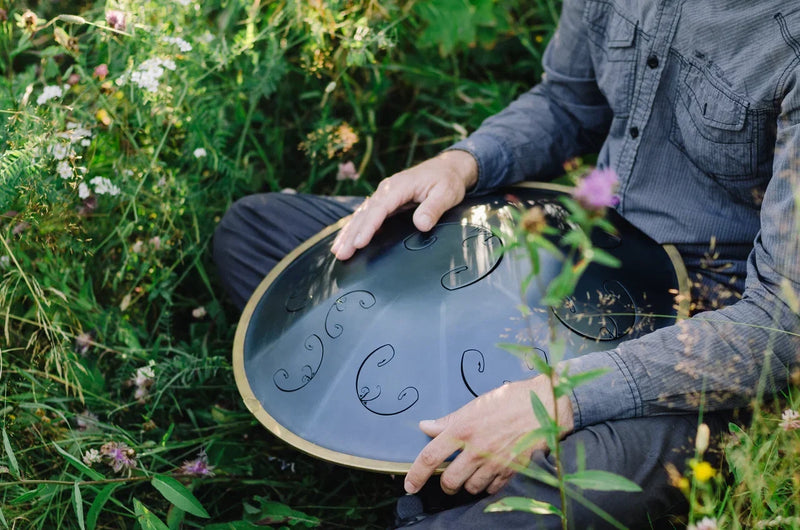
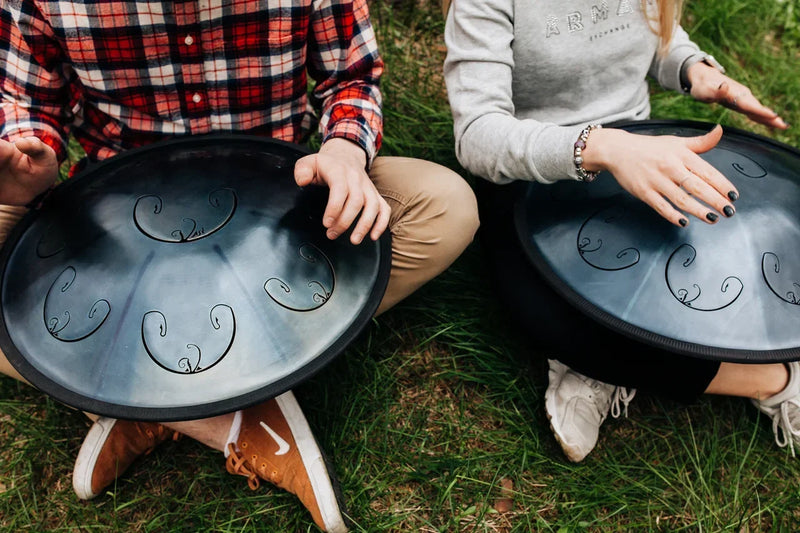
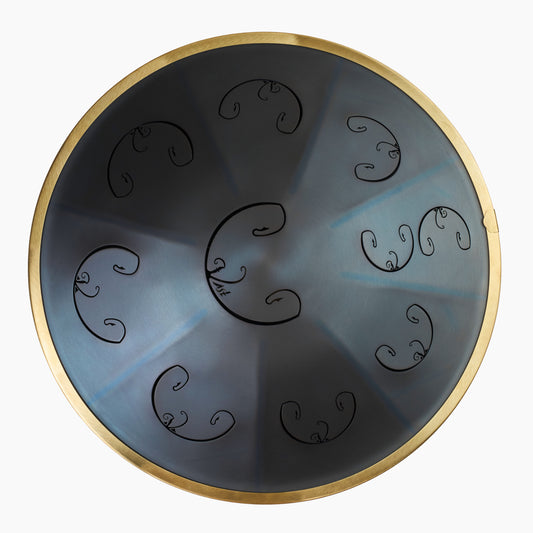
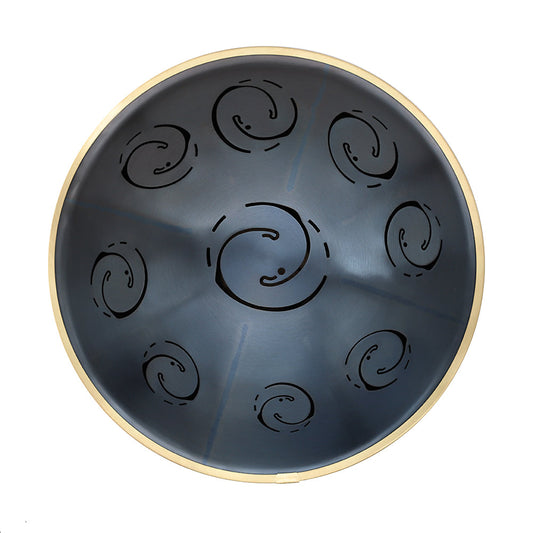
The handpan (often nicknamed the "hang drum" after its original model, the Hang) is a UFO-shaped steel instrument that you play with your hands. It has a series of tuned areas (ding-like indentations) around its surface, each producing a different musical note when tapped. Likewise, the steel tongue drum (such as the famous RAV Vast drum) is a round steel instrument with tongue-shaped cuts that vibrate to specific notes. People sometimes refer to these instruments by various names: you might hear "tongue drum", "tank drum", or even the words flipped as "drum tongue" – but they all describe the same concept. What sets handpans and tongue drums apart is that they are tuned to a particular scale, often a pentatonic or ethnic scale that is very harmonious. Because of this, there are virtually no wrong notes. Every note you strike will complement the others, so even without any musical training you can create gentle, pleasant melodies.
For a beginner, the impact of this cannot be overstated. Traditional instruments like a piano have 88 keys and it's easy to hit dissonant combinations that sound off. In contrast, a typical handpan or RAV Vast steel tongue drum might have 8 or 9 notes that all belong together. This means you can freely explore, hitting different notes in various orders, and almost everything you play will sound good. The instrument itself guides you, training your ear to the sweet spots. Many people who start with a steel tongue drum are amazed at how quickly they can produce something that actually sounds like music, not just random noise. It's an instant pathway into real musical expression.
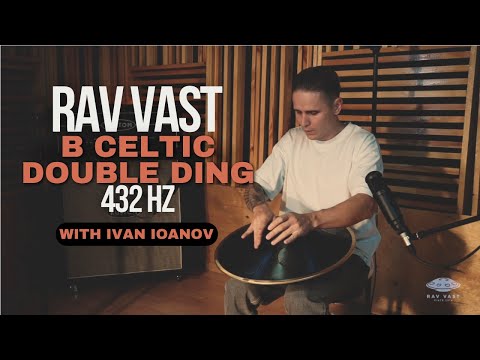
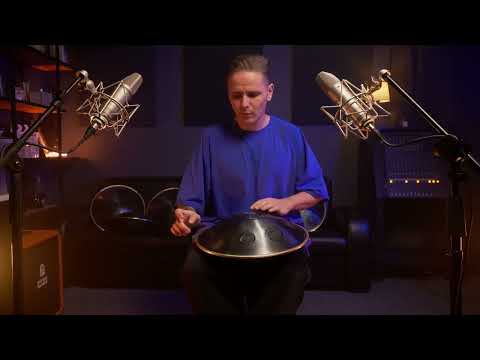
Take the RAV Vast as an example. The RAV Vast is a renowned brand of steel tongue drum known for its rich, resonant sound and long sustain. This instrument has drawn many beginners into the world of music because it's so approachable. You can set a RAV Vast drum on your lap, close your eyes, and just start gently hitting the tongues. Without knowing a single note of music theory, you'll be greeted by a calming, melodic soundscape that you are creating with your own hands. The experience feels almost magical – as if the instrument is "singing" along with your intentions. RAV Vast drums come in different scales (like D major, B Celtic minor, and others), which means players can choose a mood or flavor that resonates with them. It's no surprise that the steel tongue drum category has become synonymous with approachable music-making. These instruments have shown countless people that they too can be musicians.
Rhythm for the Soul: Emotion, Healing, and Connection
Beyond the ease of how to learn to play drums, percussion instruments offer profound emotional and therapeutic benefits. Making music with a drum engages more than just your ears and hands, it engages your emotions and even your spirit. Think about how a steady, soft drumbeat can lull you into relaxation, or how an energetic rhythm can pump you up. When you play, you naturally pour feeling into the drum. If you're joyful, you might play faster or louder; if you're seeking calm, you'll gravitate to slow, gentle beats. In this way, drumming becomes a direct outlet for emotion, a non-verbal language anyone can speak.
Percussion drums are also well-known for its stress-relieving effects. There's a reason therapies and wellness classes around the world incorporate drumming. Hitting a drum can literally help you release tension. At the same time, repetitive rhythms have a focusing, meditative effect on the mind. It's common to see people use a simple hand drum or a tongue drum as meditation music instruments. By playing a repetitive pattern, they can enter a tranquil, almost trance-like state similar to traditional meditation.
The sound healing instruments category goes beyond drums, but it's telling that percussion is at its core. From shamanic drumming circles to modern sound baths, rhythm and vibration lay the groundwork for healing experiences. These instruments can help reduce anxiety, improve focus, and even foster a sense of community when people play together. Crucially, you don't have to be a "musician" to get these benefits. The natural rhythms we all have are enough. When you sit with a percussion instrument, you're doing something humans have done for thousands of years: using rhythm and sound to heal, express, and connect.
Start Your Musical Journey with the Beat
Percussion instruments (especially those wonderful melodic drums like handpans and RAV Vast tongue drums) make music accessible to everyone. We humans are rhythmic creatures at heart, and when you have a drum under your hands, you're tapping into something deeply natural. For beginners of any age, starting with a steel tongue drum can be a revelation. It takes only a few moments to create sound and only a little longer to create something that actually feels like music. And when you choose a melodic drum, you are rewarded not only with rhythm but also with enchanting tones that can stir the heart. Along the way, you gain confidence, joy, and a direct line to emotional expression.
Beginning with percussion sets a strong foundation. There's a reason so many traditions begin their music with a drumbeat, it's the heartbeat of the music. By embracing that heartbeat yourself, you'll find it easier than ever to embark on your own musical journey. So go ahead: pick up a drum, follow your natural rhythm, and let the music flow. And no matter your background, you'll likely be surprised at just how natural and fulfilling it feels to create music this way.