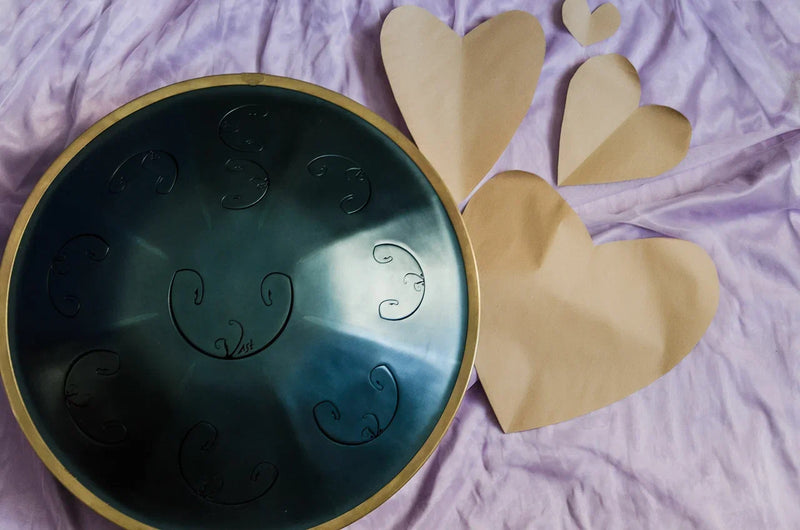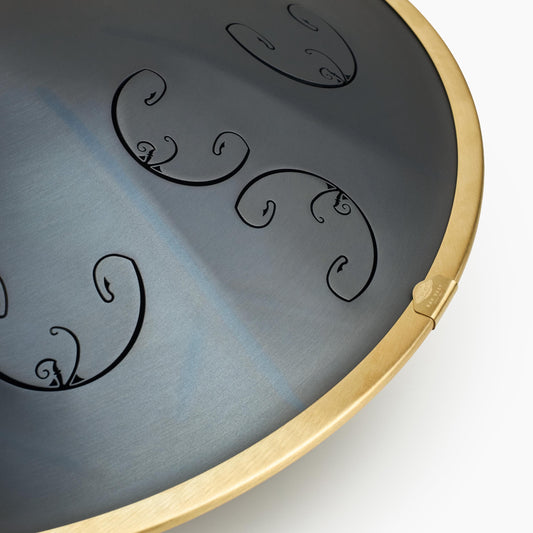

Humans often pride themselves on music and rhythm, but we are not alone in creating rhythmic patterns. Across the natural world, countless living beings produce rhythms or even music-like sequences. From the haunting chorus of a wolf pack or the complex songs of whales, rhythm permeates life. Scientists have found that many animals from frogs and insects to birds and mammals, naturally produce vocalizations at steady tempos, suggesting that rhythmic patterning is a widespread trait in communication. This article will explore examples of rhythm in nature, showing that musicality runs deep through the living world, and how we, as humans, can continue to experience and express these rhythms using percussion instruments like the RAV Vast by drawing direct inspiration from the natural world. Whether you're exploring steel pan music or creating your own steel tongue drum songs, the sounds of nature can serve as a powerful guide.
Wolf Pack Howls: A Natural Choral Performance
Wolves often howl together in harmonized choruses, each wolf choosing a different pitch. When night falls in the wilderness, a pack of wolves may raise their voices together in an eerie, yet strikingly coordinated chorus. Wolf howls are long, sustained vocal tones that can carry for miles across a landscape. In a group howl, wolves do not all sing the exact same note; instead, they harmonize. Each wolf howls at a different pitch, rather than in unison and together they creat the illusion of a larger pack.
This natural polyphony has a rhythmic quality, as wolves often match each other’s timing and overlap voices in waves of sound. Researchers have observed that in these chorus howls, wolves sometimes even synchronize the onset of their howls, starting nearly at the same moment.
The result is a haunting call-and-response pattern echoing through the night, a wild counterpart to a human choir. The purpose of this rhythmic howling is strongly tied to communication and social bonding. Wolves howl to assemble the pack (often before or after a hunt), to mark territory, to locate separated members, and even as an alarm call near dens.
The chorus howl serves as a group declaration: a way to strengthen social ties and warn rival packs at the same time. The rhythmic aspect helps the howls carry further and sound more intimidating. Interestingly, field studies note that wolves have daily patterns of vocal activity, often howling most around dusk, indicating a circadian rhythm to their communication.
In the stillness of night, a wolf pack’s howling is indeed rhythmic. It might not be rhythmic in the sense of a drumbeat, but in the rise and fall of a collective melody that is deeply woven into their social behavior.
Before this article recommends you a scale, we should mention that the scales in this article are not strict recommendations. They’re here to give you ideas, not rules. If a certain sound from nature inspires you, feel free to explore it using any RAV Vast scale you connect with. Whether you’re deciding which model to buy or already have one, remember: inspiration doesn’t follow limitations, and musical expression can come from any scale you enjoy playing.
With that being said, inspired by the layered and haunting harmony of wolf pack howls, players can use RAV Vast steel tongue drum drum scales like B Celtic Minor or G Pygmy to recreate similar textures. These scales offer long sustain and deep resonance. They are perfect for mimicking the overlapping tones and natural rhythm of a group howl. With slow, pulsing strikes and controlled overlapping notes, you can echo that collective wilderness sound using a melodic percussion instrument.
Blue Whale Songs: Underwater Music of the Deep
The blue whale, the largest animal on Earth, is also one of nature’s great musicians. In the dark expanse of the ocean, blue whales produce powerful low-frequency calls that form complex, patterned sequences of sound that can travel across hundreds of miles underwater. These calls are blue whale songs.
These giants use a repertoire of clicks, pulses, and moaning bellows to communicate. Notably, scientists describe blue whale songs as having a structured, almost musical quality. For example, a typical blue whale song consists of repeating units often labeled as “A” and “B” calls: a pulsating A-call followed by a tonal B-call, repeated over and over. Intriguingly, when blue whales are in full song (usually males during breeding season), the timing between these A-B call pairs becomes very precise and far more regular than when they make casual calls.
In other words, a blue whale’s love song has a steadier rhythm, like the consistent beats of a metronome, compared to the more irregular calls used for navigation or feeding. These underwater rhythms serve multiple purposes. Blue whale songs are thought to play a role in mate attraction and sexual selection, functioning much like a mating song. The rhythmic pattern and low frequency of the calls help them propagate through deep waters, allowing whales to communicate across vast distances when visual cues are useless in the ocean’s darkness.
Researchers have even found that variations in the pattern of blue whale songs correlate with their behavior: when whales switch from nighttime singing to daytime singing, it signals a transition from feeding to migrating. Over the course of a year, blue whales follow an annual rhythm of feeding in higher latitudes during summer and migrating to breed in warmer waters by winter.
In essence, a blue whale’s song is both music and message: a rhythmic beacon in the depths, carrying information about identity, intent, and even the changing seasons of its life.
While you can use the inspiration of the unique song of the whales in any scale, to capture the slow, powerful resonance of blue whale songs, players can use the RAV Vast E Low Pygmy as an excellent choice. It’s deep tone and long sustain allow players to echo the underwater atmosphere and the metronomic pacing of whale vocalizations. By using a spacious rhythm that mirror the structured A-B call patterns whales use for communication E Low Pygmy can offer a hands-on way to connect with the ocean's ancient voice and turn it into sound.

Birdsong and Mimicry: Avian Melodies in Nature
If any creature comes close to humans in musical talent, it’s the birds. Birdsong fills forests and fields with melodies that often have distinct rhythms and patterns. Many bird species sing in repeated phrases or motifs, much like the verses and refrains of a song. For example, a thrush might deliver a sequence of notes, pause, and then repeat, establishing a tempo.
Birds such as nightingales and canaries even embellish their songs with trills and variations, creating complex compositions. In fact, birds are capable of some feats that rival human musicians: certain species learn and improvise songs, and some even mimic the sounds around them with astonishing accuracy. A famous example is the Northern Mockingbird, which continuously expands its song repertoire throughout its life. A male mockingbird can learn up to 200 different songs, borrowing the tunes of other birds and even imitating man-made noises like car alarms or creaking gates.
This avian DJ strings borrowed notes into a medley, often repeating each phrase a few times before switching, giving a rhythmic structure to its performance. Why mimic so many sounds? One theory is sexual selection: females may prefer males with larger and more varied song repertoires, since a vast repertoire suggests an older, experienced male with good survival skills.
In essence, the mockingbird uses rhythmic variety and mimicry as a strategy to impress mates and defend territory (by sounding like multiple birds at once, similar to wolves). The ability to copy and remix sounds shows a form of creativity and a wild take on musical improvisation. Birds don’t stop at melodies; some engage in percussive rhythm as well. One of the most remarkable cases is the Palm Cockatoo of Australia. This parrot is literally a drummer: males craft thick sticks or use hard seed pods as drumsticks, then beat them in a steady rhythm against tree trunks.
Each male cockatoo has his own drumming and he performs drum solos to court females and announce his presence. Observations show that palm cockatoos strike the tree in a regular beat, in bouts that sound like a drummer tapping out a rhythm. The purpose is both mate attraction and territorial display, and females closely watch these performances.
It’s a striking parallel to human music: an animal using a tool to create rhythmic sound in a display of virtuosity. Aside from cockatoos, other birds also incorporate rhythm in non-vocal ways. For instance, some species of woodpecker drum rapidly on resonant wood as a signal, effectively using nature as a musical instrument. Moreover, birds show an ability to perceive and respond to rhythm. Parrots, which are vocal learners, have been known to bob or dance to human music beats. Such studies suggest that the neural capacity for rhythm synchronization isn’t uniquely human, it evolved in other vocal-learning species as well, possibly as a byproduct of their need to time their calls or movements with others.
From the sweet, structured sonatas of a songbird to the drumbeat of a cockatoo, birdsong illustrates that nature can be deeply musical, with rhythm and melody serving both practical purposes (like mating and marking territory) and creating beauty that we humans have admired for ages.
To mirror the rich melodic range and rhythmic playfulness of birdsong, RAV Vast scales like B Kurd or D Major can be recommended. B Kurd is perfect for melodic variation and quick motifs, making it a great choice for capturing the complex improvisations of birds like the mockingbird. D Major, on the other hand, has a bright and cheerful tone that evokes the lightness of early morning birdsong. Their expressive voices let you recreate everything from the staccato taps of a cockatoo to the flowing sequences of a nightingale, but you can bring bird-inspired rhythms to life with any RAV Vast scale, whatever speaks to your hands and ears. Players inspired by nature’s avian musicians, can compose steel pan music using ways of blending mimicry and creativity, just like the birds do. You can bring bird-inspired rhythms to life with any RAV Vast scale, whatever speaks to your hands and ears.

Insect Rhythms: Dances, Chirps, and Colony Signals
Tiny creatures also partake in nature’s orchestra. In the insect world, we find rhythmic movements and signals that help colonies thrive and individuals find mates. A well-known example is the honeybee waggle dance. It is a kind of “dance language” honeybees use to communicate. When a foraging bee discovers a rich source of nectar, she returns to the hive and performs a repetitive figure-eight waggle dance on the honeycomb. As she runs in a straight line she vigorously waggles her abdomen, then circles back and repeats. The rhythm and duration of the waggle run encodes the distance to the food, while the angle of the run tells the direction. A short, quick waggle might mean “Food is nearby”, whereas a longer, slower waggle means the source is farther away.
The bee even adjusts her dance if it’s windy or if the nectar is exceptionally good, and she repeats the pattern multiple times so that other bees can follow the “beat” and decode the message. In the darkness of the hive, this rhythmic dance is crucial. It’s a ballet of information guiding the colony to nourishment. The waggle dance is so precise and consistent that scientists liken it to a symbolic language, a dance performed in rhythm to the sun’s position and distance scaling. Insect societies also use vibrational rhythms and drumming signals.
For instance, certain ants communicate by making percussive sounds: worker ants can drum their abdomens or jaws against the ground in a rapid pattern, sending vibrations through the soil or wood of their nest. These drumming signals act like a telegraph in the dark. Ants produce subtle squeaks, rustling vibrations, and taps to convey alarm or to rally others for a task. An ant in distress may drum out a rapid tattoo that alerts soldier ants, or a foraging party might tap out signals to coordinate large-scale movements. Such signals have a clear rhythmic component. For example, leafcutter ants rub body parts in a patterned way to organize cutting and carrying leaves. Though we humans can barely hear these tiny rhythms, they are essential to the colony’s communication system. Researchers note that each species often has a species-specific tempo or pattern to its vibrations, effectively a unique “rhythmic code” for that species.
Of course, not all insect rhythms are hidden; some are famously loud. Crickets and katydids fill the summer nights with rhythmic chirping. A male cricket rubs its wings together to produce each chirp, often maintaining a steady pulse over long periods. In fact, the chirping is so regular that one old piece of folk wisdom (Dolbear’s Law) says you can estimate the temperature by the tempo of a cricket’s chirps. Count a certain number of chirps and you get a reliable measure of degrees. (This works because crickets chirp faster in warmth and slower in cold, but the pattern remains steady like a natural thermometer.) The main purpose of a cricket’s chirp is to attract a mate, essentially serenading any nearby females with a continuous song. The rhythm matters: in some species, females prefer males who keep the beat at just the right pace or frequency. At dusk in the tropics, cicadas take the stage with a cacophony of loud, pulsating calls. Often groups of males synchronize their buzzing in waves, and create a rising and falling rhythm in the trees. These pulses can be nearly isochronous (equal intervals), an adaptation that may help amplify the collective sound to impress females or deter predators with overwhelming noise.
Fireflies, too, add to the light-and-sound show: in certain species, hundreds of male fireflies flash their bioluminescent lights in unison, blinking on and off in a synchronized rhythm that turns a whole tree into a twinkling display. This rhythmic flashing (a visual form of music) is timed to help females spot the coordinated males of their own species amid the darkness. From the disciplined dance of the honeybee to the percussion of ants and the mating songs of crickets, insects display rhythmic behaviors that are crucial for survival. These small creatures show that rhythm is an ancient language of life, one that evolved independently in many forms, whether it’s a vibration, a motion, or a sequence of sounds. The patterns may be simple, but in their repetition and timing lies meaning, not unlike a simple drumbeat that can carry a complex message.
To echo the rapid, coded rhythms of insect life (from the waggle of honeybees to the synchronized chirps of crickets) RAV Vast scales like C Golden Gate, B Golden Arcadia are especially well-suited. C Golden Gate responds with bright, clean tones ideal for quick tapping and percussive sequences, while B Golden Arcadia offers shimmering clarity with just enough warmth to reflect organic, patterned repetition. But then again, players can experiment with their own rhythmic codes with any scale, guided by the tiniest percussionists in nature.

Conclusion
From microscopic insects to mighty whales, rhythm and musicality are deeply embedded in the natural world. These examples show that rhythmic patterns have critical functions for living beings. They coordinate group activities, convey information, attract mates, and keep life in sync with nature’s cycles.
What humans experience as music or rhythm is, in many ways, an extension of patterns that have been in play on Earth for millions of years. The howl of a wolf, the song of a whale, the chorus of frogs, the dance of a bee… All echo the fundamental beat of life. Recognizing the rhythms produced by other living beings enriches our appreciation of nature. We begin to hear the forest not as random noise but as an orchestra of communication.
The world around us pulses with pattern and repetition. Leaves rustling in periodic breezes, insects droning in afternoon heat, birds calling at dawn in a predictable sequence… These natural rhythms remind us that music is not only a human invention but a universal language shared across species.
Humans didn’t invent rhythm. We inherited it. Our own sense of rhythm may have roots in these primal patterns that early humans heard in the wild. In a very real sense, nature was the first composer, a grand symphony of life in which we are just one of the performers, and all living beings dance to its tune.
When we tune into natural rhythms, we reconnect with the world around us. We begin to understand that we’re not the only ones keeping time. Life itself is a song, and every creature plays a part in its unfolding melody.
So pick up your favorite RAV Vast scale, listen closely, and see what rhythms the world reveals.